Introduction
Porcelain tile has never stood still.
Over the past several decades, advances in manufacturing, digital printing, material science, and architectural design have transformed porcelain from a practical building material into one of the world's most versatile surfacing solutions.
Today's porcelain bears little resemblance to the products available just a generation ago. Larger formats, remarkably realistic surface reproductions, innovative finishes, and increasingly sophisticated manufacturing techniques continue to redefine what porcelain tile can achieve.
Understanding that evolution helps explain why porcelain has become one of the most influential materials in modern architecture.
How has porcelain tile evolved?
The evolution of porcelain has been driven by continuous innovation.
Early porcelain collections focused primarily on durability and functionality.
As manufacturing technology advanced, designers gained the ability to reproduce natural materials with extraordinary realism while maintaining the technical advantages of porcelain.
What once consisted of relatively simple finishes has expanded into an extensive portfolio of architectural surfaces capable of satisfying both aesthetic and performance requirements.
What has changed over the years?
Modern porcelain continues to evolve in many ways.
Manufacturers now produce:
- Larger tile formats.
- Large porcelain panels and slabs.
- More realistic marble, stone, wood, and concrete reproductions.
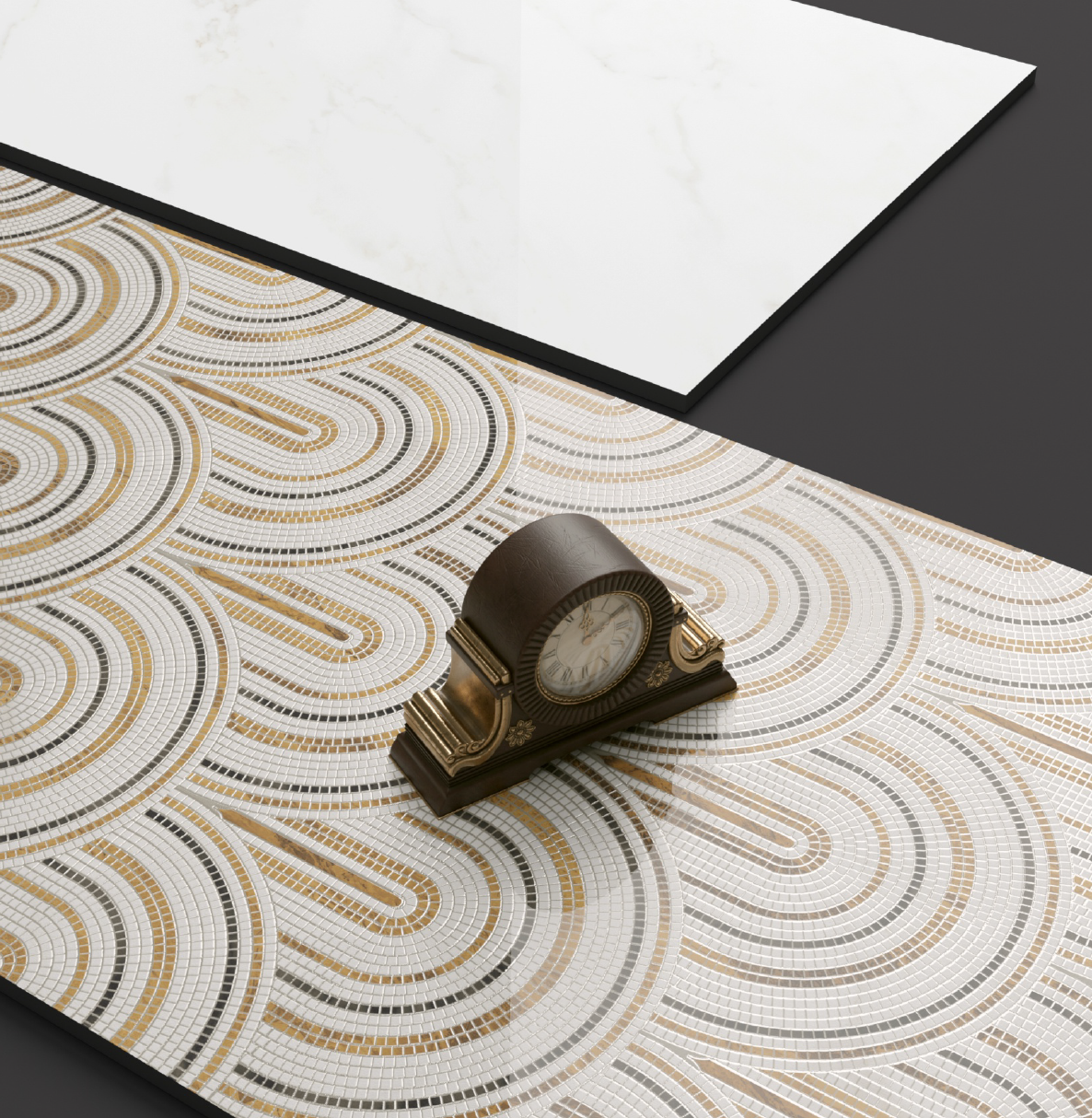
- Sophisticated decorative collections.
- Terrazzo-inspired designs.
- Three-dimensional textures.
- Matte, satin, polished, and soft-touch finishes.
- Anti-slip technologies.
- Bookmatched collections.
- Improved dimensional precision.
- More sustainable manufacturing processes.
- Enhanced digital printing technologies.
Do design trends influence porcelain?
Absolutely.
Architecture continually evolves, and porcelain evolves alongside it.
Natural stone, hardwood, concrete, terrazzo, fabrics, metals, and handcrafted materials have all influenced porcelain design over the years.
Some trends remain temporary.
Others become timeless architectural languages that continue inspiring new collections decade after decade.
Understanding the difference helps designers create spaces that remain beautiful long after individual trends have passed.
Why do new finishes continue to appear?
Innovation never stops.
Every year, manufacturers introduce new surface textures, finishes, colors, decorative techniques, production technologies, and installation solutions.
Some developments improve appearance.
Others enhance durability, safety, maintenance, or sustainability.
Many innovations begin by solving technical challenges before eventually influencing design itself.
This constant refinement is one of the reasons porcelain remains one of the most dynamic materials in the architectural industry.
Will porcelain continue to evolve?
Almost certainly.
Future developments may include even larger formats, improved sustainability, more advanced digital technologies, lighter products, new surface textures, enhanced manufacturing precision, and innovations that have yet to be imagined.
While it is impossible to predict every advancement, history suggests that porcelain will continue adapting to changing architectural needs and technological progress.
Conclusion
The story of porcelain tile is one of continuous evolution.
Its remarkable journey from a durable construction material to one of architecture's most versatile design surfaces reflects decades of innovation, creativity, and engineering excellence.
Understanding that evolution allows architects, designers, builders, and homeowners not only to appreciate today's porcelain products but also to recognize that the industry will continue advancing for generations to come.