Introduction
For centuries, mosaic has been one of the most recognizable forms of architectural decoration. From ancient Roman bathhouses to contemporary luxury homes, mosaic surfaces have been used to introduce detail, texture, and artistic expression into both interior and exterior spaces.
Today, porcelain mosaic tile combines this rich design tradition with the durability and performance of modern porcelain. Available in countless colors, shapes, patterns, and finishes, mosaic porcelain allows designers to create surfaces that range from subtle accents to striking architectural features.
What is mosaic porcelain tile?
Mosaic porcelain tile consists of small individual porcelain pieces that are typically mounted on mesh-backed sheets for easier installation.
The individual pieces may be square, rectangular, hexagonal, circular, herringbone, picket, penny round, or many other shapes.
Although each piece is small, the assembled sheet allows installers to efficiently cover larger areas while maintaining consistent spacing and alignment.
Is mosaic tile only for showers?
Not at all.
Although mosaic porcelain is widely used on shower floors because its numerous grout joints provide additional slip resistance, it is equally suitable for many other applications.
Mosaic porcelain is commonly installed on kitchen backsplashes, bathroom walls, fireplace surrounds, swimming pools, feature walls, commercial spaces, and decorative borders.
Its flexibility allows it to follow curves, niches, columns, and other architectural details that larger tiles cannot easily accommodate.
Why has mosaic porcelain remained so popular?
Mosaic offers something that larger porcelain tiles cannot.
Its smaller pieces allow designers to introduce texture, intricate patterns, and decorative detail while adapting to complex surfaces and unique architectural features.
Because porcelain mosaics are available in a wide variety of colors, finishes, and shapes, they complement virtually every architectural style, from traditional to contemporary.
Advantages of mosaic porcelain tile
Mosaic porcelain offers numerous practical advantages.
- Excellent design flexibility.
- Ideal for curved surfaces.
- Increased slip resistance in many floor applications.
- Extremely low water absorption.
- Excellent durability.
- Resistant to stains and scratches.
- Suitable for residential and commercial projects.
- Available in countless colors, shapes, and finishes.
- Excellent for decorative accents.
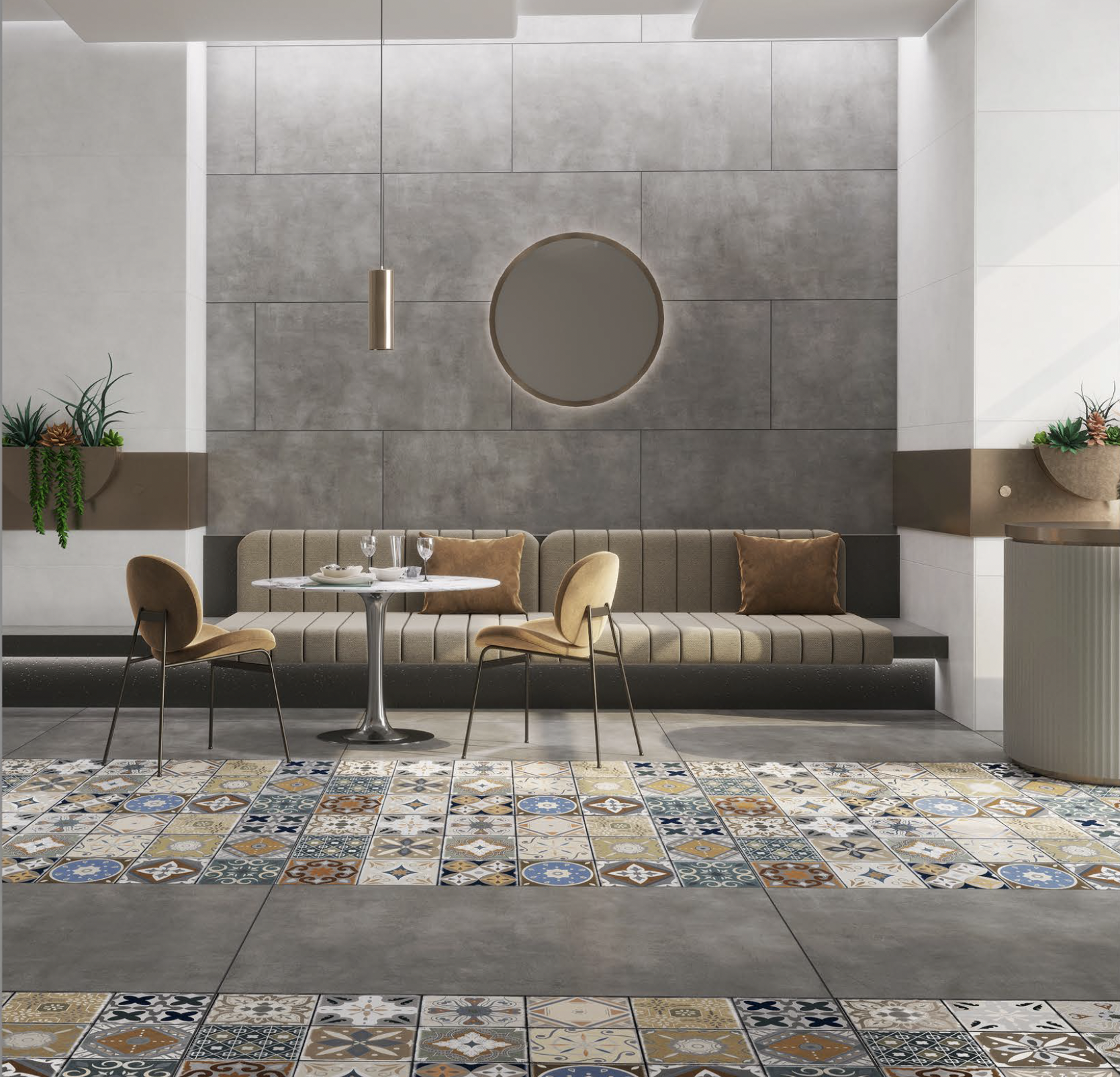
- Easy to combine with larger porcelain tiles.
Where is mosaic porcelain commonly used?
Mosaic porcelain is frequently installed in:
- Shower floors
- Shower walls
- Bathroom walls
- Kitchen backsplashes
- Swimming pools
- Fireplace surrounds
- Accent walls
- Niches
- Decorative borders
- Commercial interiors
- Hotel bathrooms
- Spa environments
Maintenance
Porcelain mosaic requires very little maintenance.
Routine cleaning with warm water and a pH-neutral cleaner is generally sufficient to preserve its appearance.
Because mosaic installations contain more grout joints than large format tile, proper grout maintenance is also an important part of long-term care.
Conclusion
Mosaic porcelain tile combines centuries of artistic tradition with the strength and durability of modern porcelain.
Its ability to adapt to complex surfaces while introducing texture, pattern, and visual interest has made it one of architecture's most versatile finishing materials.
Whether used as a subtle accent or a dramatic focal point, mosaic porcelain continues to play an important role in contemporary residential and commercial design.