Introduction
Porcelain tile is widely recognized as one of the most stain-resistant flooring and wall materials available. Whether installed in kitchens, bathrooms, commercial buildings, restaurants, hotels, or outdoor living spaces, porcelain consistently delivers exceptional resistance to everyday spills and contaminants.
Unlike many natural materials that require regular sealing or specialized maintenance, porcelain's exceptionally dense structure prevents most liquids and staining agents from penetrating its surface. This makes porcelain one of the easiest architectural materials to clean while helping preserve its original appearance for decades.
Understanding why porcelain naturally resists stains helps explain why it has become one of the world's most trusted surfacing materials for both residential and commercial applications.
What Is Stain Resistance?
Stain resistance refers to a material's ability to prevent liquids, pigments, oils, and other contaminants from permanently discoloring its surface.
Materials containing microscopic pores may absorb liquids carrying pigments. Once those pigments penetrate beneath the surface, stains become increasingly difficult to remove.
Because porcelain contains extremely few open pores, most staining substances remain on the surface long enough to be removed through normal cleaning.
Why Is Porcelain Naturally Stain Resistant?
Porcelain owes its exceptional stain resistance primarily to its manufacturing process.
Carefully selected clays and minerals are compressed under extremely high pressure before being fired at temperatures that typically exceed 2,200°F (1,200°C).
During firing, the material vitrifies into an exceptionally dense body with very little remaining pore space. Since liquids cannot easily penetrate the tile, pigments remain on the surface instead of becoming trapped inside the material.
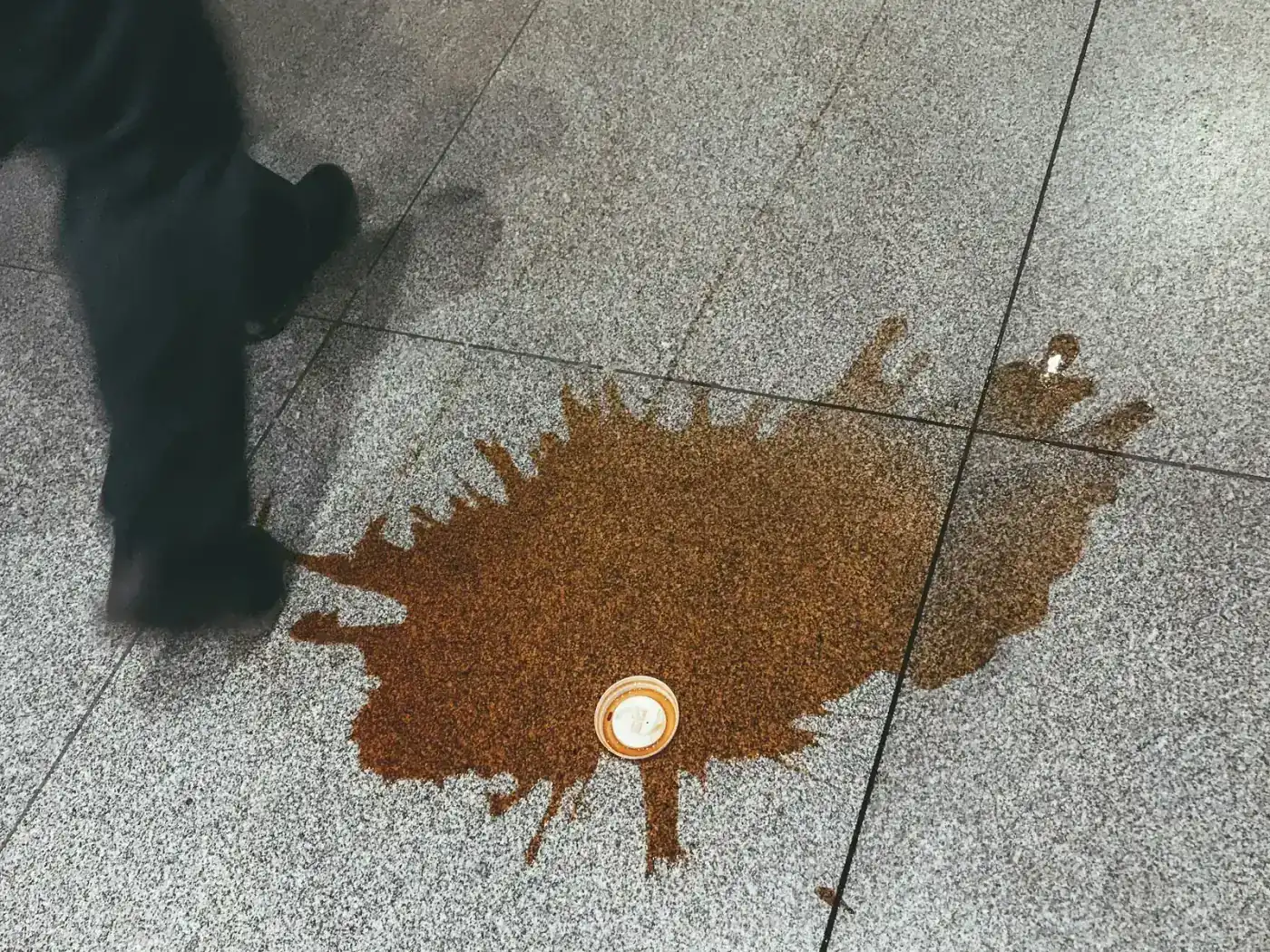
As a result, common household substances such as coffee, tea, red wine, tomato sauce, cooking oils, cosmetics, fruit juice, mud, and many food spills can usually be cleaned without leaving permanent marks.
The Role of Low Water Absorption
One of porcelain's greatest technical advantages is its extremely low water absorption, which directly contributes to superior stain resistance.
According to internationally recognized standards, porcelain tile absorbs no more than 0.5% of its weight in water during standardized laboratory testing. Many premium porcelains absorb considerably less.
Because water and staining agents follow the same microscopic pathways into a material, limiting water absorption also limits stain penetration.
Imagine a completely dry porcelain tile weighing 100 pounds. After being immersed in water under standardized laboratory testing for approximately 24 hours, a maximum absorption rate of 0.5% means the tile would gain no more than half a pound of absorbed water. Many premium porcelains absorb substantially less than this limit.
This extremely dense structure is one of the defining characteristics that separates porcelain from many other ceramic materials.
Does Glazed Porcelain Resist Stains Better?
In many situations, yes.
Glazed porcelain includes a vitreous surface permanently fused to the tile during firing. This protective layer creates an additional barrier that makes everyday cleaning even easier while providing outstanding resistance to common household staining agents.
Unglazed porcelain, however, is also highly stain resistant because its body remains exceptionally dense. Any slight difference in cleanability is usually related to surface texture rather than absorption.
Both glazed and unglazed porcelain generally outperform many alternative flooring materials when properly maintained.
Can Porcelain Ever Stain?
Although porcelain is one of the most stain-resistant architectural surfaces available, no material is completely immune under every circumstance.
Extremely aggressive industrial chemicals, prolonged exposure to certain pigments, or construction residues left on the surface may occasionally affect appearance if not cleaned appropriately.
Likewise, heavily textured finishes can temporarily retain dirt within their surface texture. In these situations, the dirt remains on the surface rather than penetrating into the body of the porcelain and can usually be removed with proper cleaning methods.
Under normal residential and commercial conditions, porcelain provides excellent long-term protection against permanent staining.
Common Household Stains
Porcelain performs exceptionally well against many everyday substances commonly found in homes and commercial buildings.
| Common Substance | Expected Performance |
|---|---|
| Coffee | ✓ Easily removed |
| Tea | ✓ Easily removed |
| Red Wine | ✓ Easily removed |
| Tomato Sauce | ✓ Easily removed |
| Cooking Oils | Surface cleaning only |
| Fruit Juice | ✓ Easily removed |
| Soft Drinks | ✓ Easily removed |
| Mud | Surface cleaning only |
| Cosmetics | Usually removable |
| Pet Accidents | Usually removable |
Prompt cleaning is always recommended, but porcelain's dense body provides an important margin of protection that helps prevent permanent staining.
How to Maintain Stain Resistance
One of porcelain's greatest advantages is that maintaining its stain resistance requires very little effort.
- Clean spills as soon as practical.
- Sweep or vacuum regularly to remove abrasive dirt.
- Use warm water together with a pH-neutral cleaner.
- Avoid waxes or surface coatings that can leave residue.
- Follow the manufacturer's recommendations for specialty cleaning products when necessary.
Unlike many natural stones, porcelain generally does not require periodic sealing to preserve its stain resistance.
Why This Matters in Everyday Life
Superior stain resistance provides practical benefits that extend far beyond appearance.
It reduces maintenance, simplifies cleaning, preserves the original beauty of the installation, and contributes to healthier indoor environments by preventing contaminants from penetrating beneath the surface.
These characteristics make porcelain especially well suited for demanding environments including:
Common applications include kitchens, bathrooms, laundry rooms, restaurants, hotels, healthcare facilities, outdoor living areas, and commercial buildings—subject to the exact tile’s intended-use and maintenance requirements.
Conclusion
Porcelain tile's remarkable stain resistance begins with the material itself. Its exceptionally dense body and extremely low water absorption prevent most liquids and pigments from penetrating beneath the surface, making porcelain one of the easiest architectural materials to clean and maintain.
Combined with outstanding durability, moisture resistance, frost resistance, and long service life, stain resistance is one of the key reasons porcelain continues to be specified for residential, commercial, and architectural projects around the world.