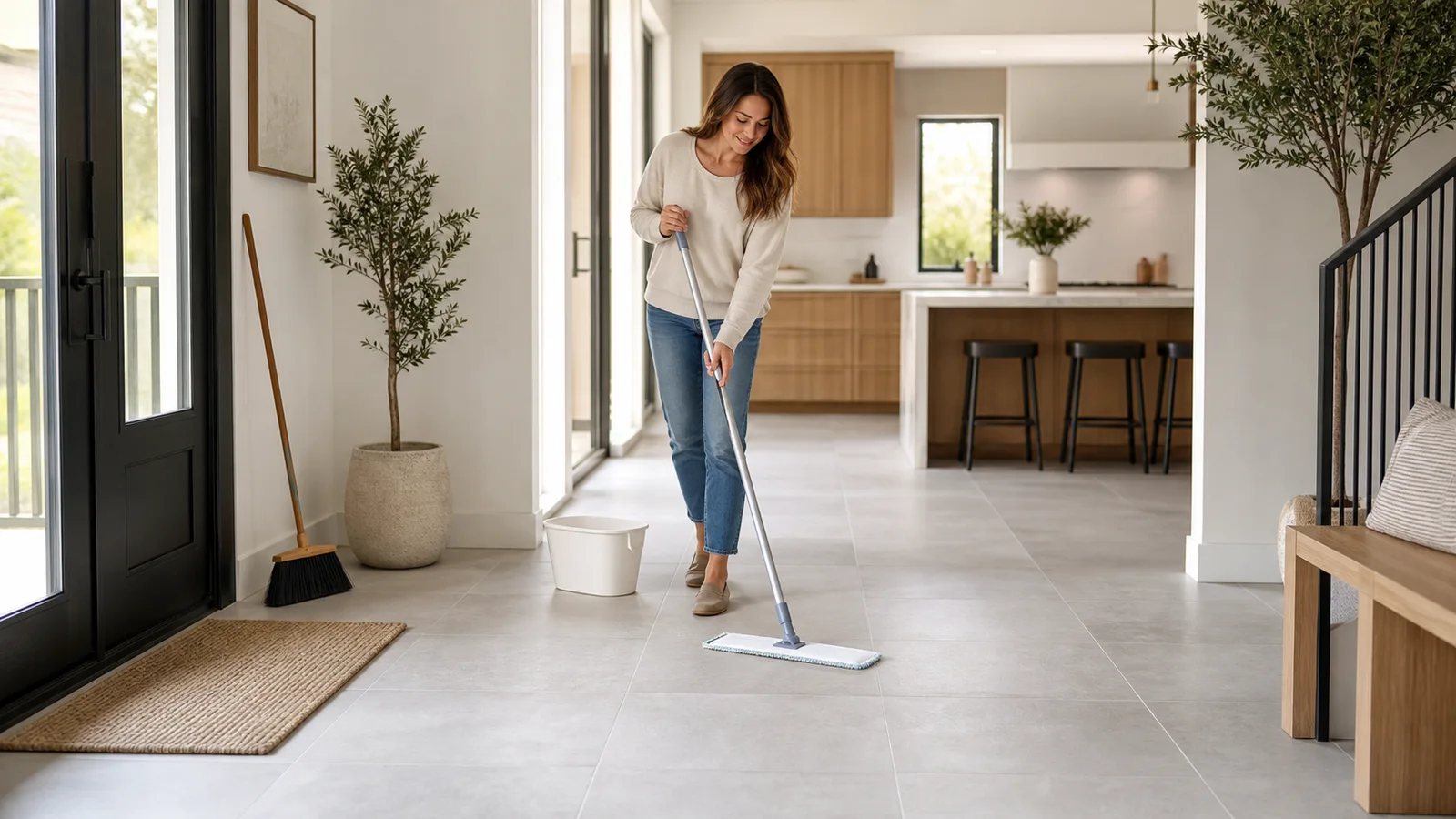
Porcelain tile is generally easy to maintain, but the first days after installation deserve special care. Mortar, grout, sealers, and caulks need their specified cure time, and the wrong cleaner can turn a simple residue into a larger problem.
Before the Installer Leaves
- Ask when the floor can accept foot traffic, furniture, water, and normal cleaning.
- Record the exact tile, finish, grout, sealant, mortar, membrane, and sealer used.
- Request the manufacturers’ care instructions and warranty information.
- Inspect for grout haze, residue, chipped edges, uneven joints, or incomplete sealant.
- Keep spare tile from the same shade and caliber lot in a dry, labeled location.
Do not use a generic waiting period. Cure and return-to-service times differ by product, temperature, humidity, and application.
The First Cleaning
First remove loose dust and grit without scratching the surface. Then identify what remains:
| What you see | Best next step |
|---|---|
| Ordinary dust or loose construction soil | Vacuum or sweep gently, then use clean water or an approved neutral cleaner and rinse well |
| Cement grout haze | Follow the grout manufacturer’s cure time and approved haze-removal method |
| Epoxy grout haze | Use the epoxy grout manufacturer’s dedicated remover and timing instructions |
| White deposits that return | Identify possible efflorescence or moisture movement before treating the surface |
| Unknown film or discoloration | Stop, photograph it, and ask the installer and product manufacturers before experimenting |
Simple Routine Care
- Use entry mats to capture outdoor grit before it reaches the floor.
- Sweep or vacuum with a tile-safe attachment before damp cleaning.
- Use clean water or a manufacturer-approved neutral cleaner in the correct dilution.
- Change dirty cleaning water rather than spreading soil across the floor.
- Rinse when the cleaner requires it and remove remaining water.
- Wipe spills promptly, especially oils, dyes, and substances that can stain grout.
Busy entries, kitchens, pet routes, and commercial paths need more frequent soil removal than quiet rooms.
Grout and Sealing Are Separate Decisions
Many glazed porcelain tiles do not need sealing. Cementitious grout is more porous and may benefit from an approved penetrating sealer after it has cured. Epoxy grout usually follows different care and sealing rules. Some unglazed or polished porcelain products may also have specific recommendations.
Understand the role of joints and grout types in What Do Grout Joints Mean? →
Common Maintenance Mistakes
- Using vinegar, strong acids, bleach, or other harsh chemicals without product approval
- Mixing cleaning chemicals
- Using abrasive pads that can alter a decorative, polished, or specialty surface
- Leaving soap, cleaner, wax, oil, or polish residue on the floor
- Applying a topical coating to “improve” shine or traction without manufacturer approval
- Assuming every stain, haze, or white deposit has the same cause
- Ignoring failed sealant, cracked grout, loose tile, or recurring moisture
One Thing to Know Before Buying
Although this guide is for after installation, maintenance starts with selection. Highly textured surfaces, pale grout, polished finishes, outdoor exposure, pets, and busy entries can require different routines. Ask for written care instructions and test a sample before committing to a large area.
For stain behavior and realistic expectations, read Why Is Porcelain Tile So Stain Resistant? →
Common Questions
What should I use for the first cleaning?
Follow the tile and grout instructions. Remove loose soil, then use clean water, a suitable neutral cleaner, or the grout manufacturer’s approved haze remover for the actual residue.
Should I use white vinegar for the first cleaning?
Not as a general rule. Vinegar is acidic and may attack cement grout or affect other materials. Use it only when the tile and grout manufacturers specifically approve it after curing.
Does porcelain tile need to be sealed?
Many glazed porcelain surfaces do not. Cementitious grout and some unglazed or polished products may have different recommendations.
How often should porcelain tile be cleaned?
Remove abrasive grit as needed and damp-clean according to use. Entries, kitchens, pets, and busy routes usually require more frequent care.
Why does my new tile look cloudy?
Possible causes include grout haze, construction dust, cleaner residue, or dirty rinse water. Identify the residue and grout type before choosing a remover.
Can wax or polish make porcelain tile shinier?
Do not apply it unless the tile manufacturer approves it. Coatings can change appearance and traction, attract soil, and complicate maintenance.