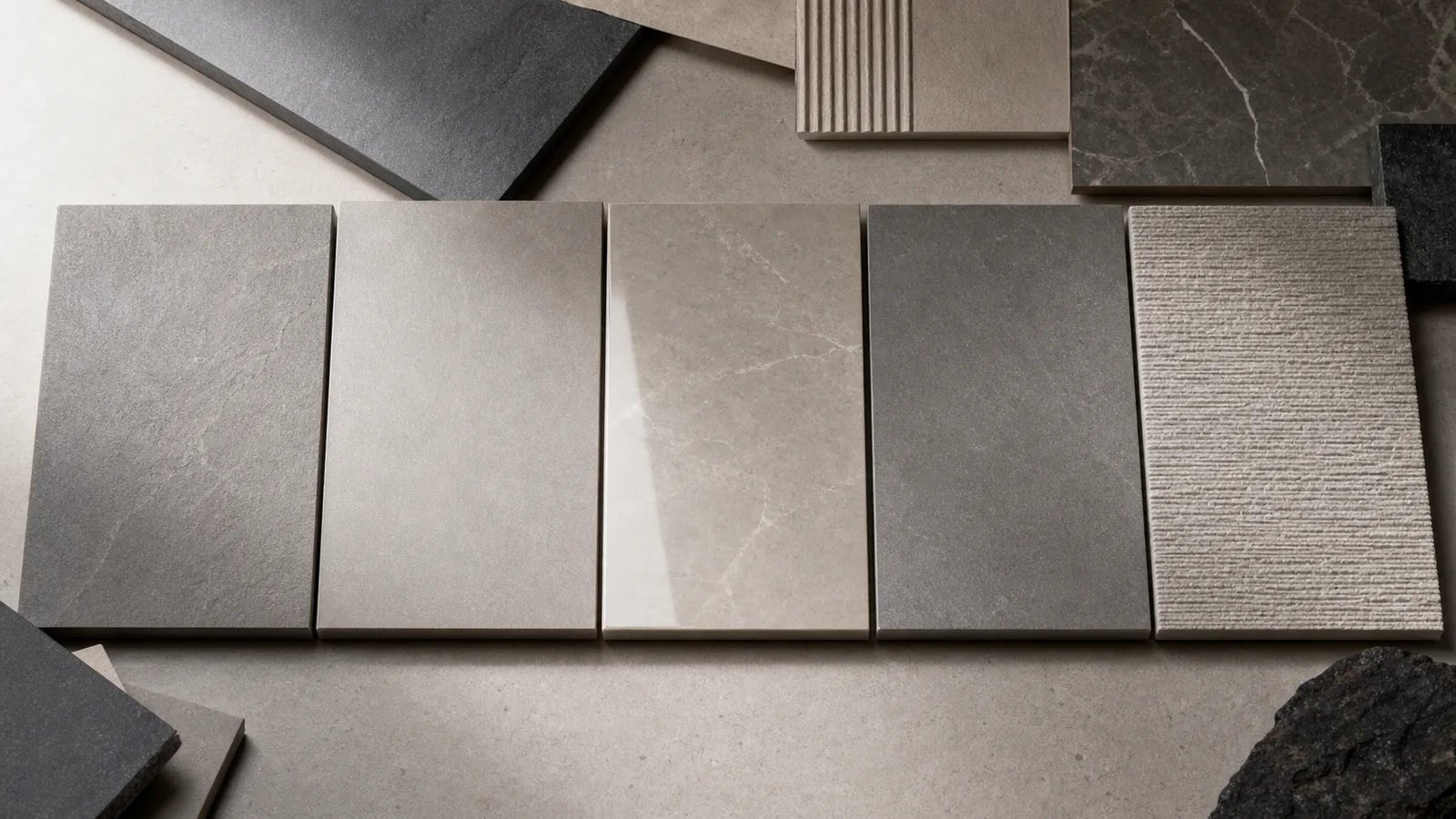
A porcelain tile finish is the character of its exposed surface—how it looks, reflects light, feels, and interacts with traffic and maintenance. Finish is both an aesthetic and technical decision, but a finish name alone does not establish performance.
What “Finish” Means in Porcelain Tile
Terms such as matte, natural, honed, satin, polished, glossy, textured, structured, and grip help describe a surface. They are useful, but they are not universal performance classifications. Two manufacturers can use the same term for surfaces with different gloss, microtexture, cleanability, abrasion behavior, or slip-resistance results.
The correct interpretation combines three layers of information: the visual description, the manufacturing method, and the product’s declared test data and recommended use.
Common Porcelain Tile Finishes
Matte or Natural
A matte or natural finish has low light reflection and usually presents color and texture softly. It can reduce the visibility of reflections, but the word “matte” does not automatically mean slip resistant, easy to clean, or suitable outdoors.
Satin or Soft
Satin finishes occupy the visual space between matte and high gloss. They may have a gentle sheen and smoother hand while retaining a quieter reflection than polished tile. Names such as soft, silk, semi-polished, or lappato are manufacturer-specific and require product-level verification.
Honed
Honed generally describes a smooth, low-sheen surface inspired by honed stone. On porcelain, the result may be created through glaze design, mechanical processing, or a combination of manufacturing steps. It should not be assumed to perform exactly like honed natural stone.
Polished or High Gloss
Polished porcelain has a highly reflective surface produced either by mechanically polishing the tile body or by creating a glossy glazed surface. These are different constructions. Polishing can reveal microscopic surface pores, so manufacturers may apply factory treatments and issue specific post-installation cleaning or sealing instructions.
Textured or Structured
Textured finishes use visible or tactile relief to reproduce stone, concrete, wood, fabric, or another material. Structure can influence traction and appearance, but deeper texture can also retain soil or require more deliberate cleaning.
Grip or Anti-Slip
Grip finishes are engineered for increased traction in selected wet, exterior, or demanding environments. “Anti-slip” does not mean slip-proof. Suitability depends on the actual test method and result, slope, contaminants, footwear, drainage, maintenance, and the manufacturer’s declared application.
How Porcelain Tile Finishes Are Created
Surface character can be developed at several stages of production. Press molds and punches can form relief; digital decoration can create visual depth; glazes and protective layers can alter gloss and texture; firing fixes the surface; and post-firing processes such as polishing or brushing can modify reflectivity and touch.
- Glazed surface: a fired coating contributes color, design, gloss, texture, and surface performance.
- Unglazed surface: the exposed ceramic body supplies the visible and wearing surface.
- Mechanical finishing: polishing, honing, or brushing modifies the fired surface after the kiln.
- Structured pressing: relief is formed through the mold or press tooling.
- Surface treatments: factory-applied products may support stain behavior, cleanability, or protection after polishing.
The visible result may be similar even when the construction differs. That difference matters because cleaning instructions and wear behavior may not be identical.
How Finish Relates to Performance
Slip Resistance
Texture can contribute to traction, but appearance cannot predict a test result. Review the declared slip-resistance method and value for the exact product and use condition. A smooth-looking engineered surface may test differently from what its appearance suggests, while a visibly textured surface can still be unsuitable in a particular contaminant or slope condition.
Abrasion and Visible Wear
Glazed and unglazed surfaces are evaluated differently. Glazed tile is assessed for visible surface abrasion, while unglazed tile uses deep-abrasion or material-loss methods. High gloss, dark color, or directional light can make surface changes more noticeable even when the product remains serviceable.
Stains, Chemicals, and Cleaning
Smoother surfaces are not automatically stain-proof, and textured surfaces are not automatically difficult to maintain. Soil type, surface microstructure, grout, cleaning chemistry, tools, dwell time, and frequency all matter. Review stain- and chemical-resistance data separately and follow the manufacturer’s maintenance instructions.
Light and Visual Consistency
Polished surfaces amplify reflections, lighting variation, lippage, and substrate or installation irregularities. Matte finishes diffuse light but may reveal residue differently. Strong grazing light can make normal shade, texture, and flatness variation more visible, so the finished installation should be evaluated under its intended lighting.
Selecting a Finish for the Application*
- Dry residential interiors: choose by design and maintenance preference, then verify floor-use approval where applicable.
- Bathrooms and wet interiors: review actual wet slip-resistance data, drainage, slope, tile size, grout layout, and cleaning.
- Exterior floors: confirm exterior approval, traction, freeze-thaw suitability where relevant, drainage, and installation method.
- Commercial traffic: evaluate abrasion, expected grit, cleaning equipment, entrances, rolling loads, and appearance expectations.
- Walls: reflectivity, lighting, cleanability, format, weight, and installation method may be more important than floor traction.
- Showers and pools: use application-specific manufacturer guidance and project requirements; no finish name alone establishes suitability.
* This selection topic is expanded step by step in Buying Guides: How to Choose a Porcelain Tile Finish for Every Application →
What to Request Before Specification
Ask for the current technical data sheet, finish name and surface construction, intended-use statement, applicable slip-resistance result, abrasion classification or value, stain and chemical resistance, cleaning instructions, and any factory-treatment or sealing guidance. Confirm that every result belongs to the exact finish—not merely another surface in the same collection.
Common Questions
Is matte porcelain tile always less slippery than polished tile?
No. Visual gloss does not establish slip resistance. Compare the exact products using the applicable test method, use condition, and manufacturer recommendation.
Does polished porcelain tile need to be sealed?
Not every polished porcelain product has the same requirement. Mechanical polishing can affect the surface, and some products receive a factory treatment. Follow the specific manufacturer’s cleaning, protection, and sealing instructions.
What is the best porcelain tile finish?
There is no universally best finish. The right choice matches the intended location, traffic, wet or dry conditions, maintenance program, lighting, desired appearance, and verified product performance.
Are “grip” and “anti-slip” standardized finish names?
No. They are commonly used descriptions, not universal guarantees. Verify the named slip test, result, application category, and manufacturer guidance for the exact product.
Standards Referenced
The following official standards provide relevant test scopes. A project should use the complete applicable editions together with manufacturer instructions and local requirements.
- ISO 10545-2:2018 — dimensions and surface quality of ceramic tile.
- ISO 10545-7:1996 — surface abrasion resistance of glazed ceramic floor tile.
- ISO 10545-6:2010 — deep abrasion resistance of unglazed ceramic floor tile.
- ISO 10545-13:2016 — chemical resistance of ceramic tile.
- ISO 10545-14:2015 — resistance to stains of ceramic tile surfaces.
- ASTM C1027-19 — visible abrasion resistance of glazed ceramic tile.