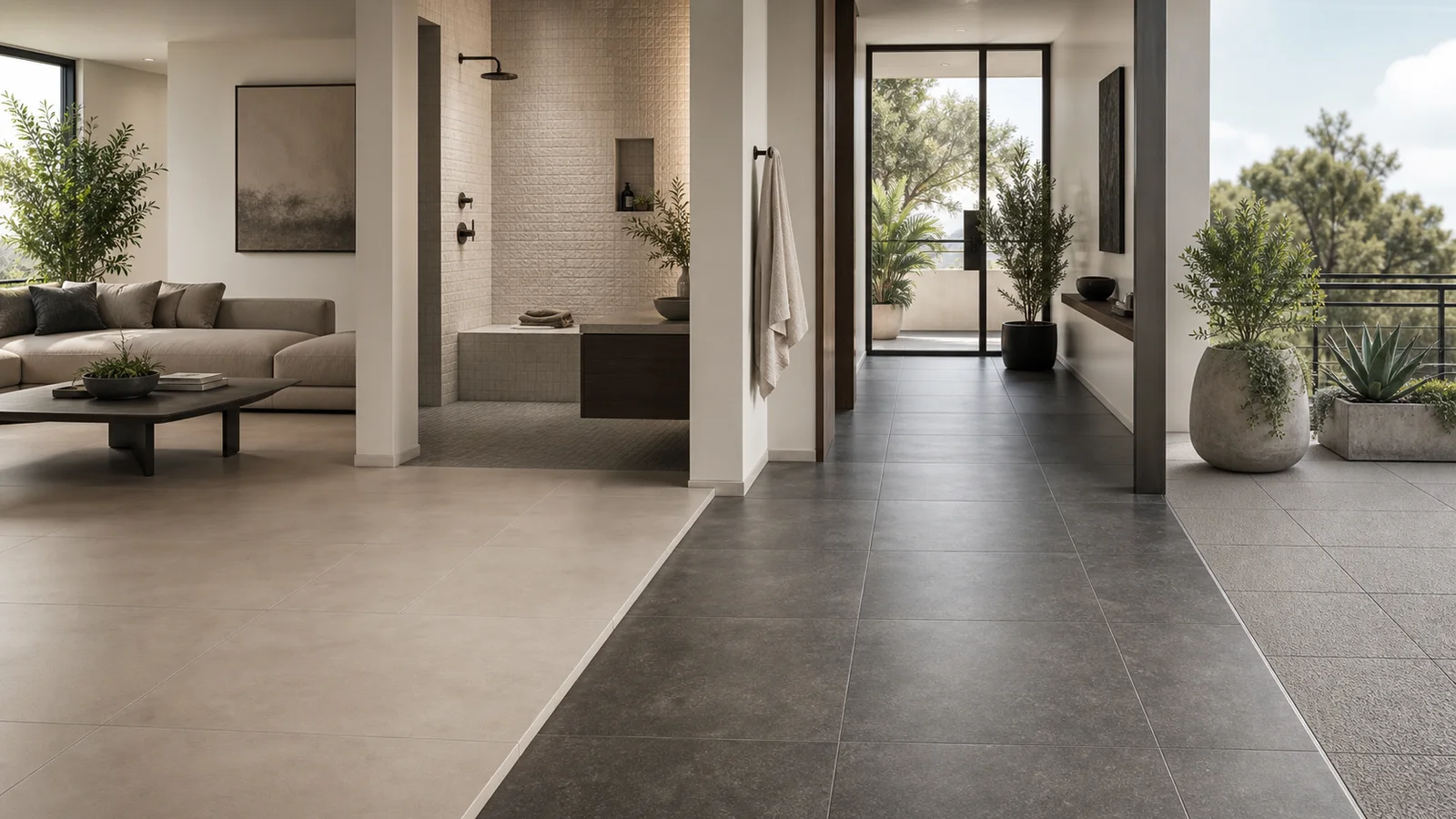
The best porcelain tile finish is not determined by appearance alone. A successful choice connects the exact surface to its location, traffic, water exposure, contaminants, cleaning program, lighting, and verified manufacturer data.
Start With the Application—Not the Finish Name
Begin by defining what the surface must do. Is it a wall or floor? Dry or frequently wet? Interior or exterior? Residential or commercial? Will it receive tracked-in grit, rolling loads, grease, cosmetics, pool chemicals, or strong daylight?
Only after those conditions are clear should terms such as matte, satin, polished, textured, or grip narrow the choice. Finish names vary between manufacturers and do not replace slip-resistance, abrasion, stain, chemical-resistance, or use-classification data.
Finish Selection by Application
| Application | Useful starting point | Verify before buying |
|---|---|---|
| Dry residential floor | Matte, natural, satin, or approved polished finish | Floor-use approval, maintenance, expected wear, lighting |
| Bathroom floor | Matte or engineered traction finish | Wet slip data, slope, tile size, grout layout, cleaning |
| Shower floor | Application-approved textured tile or mosaic | Wet-area approval, drainage, slope, traction, installation system |
| Kitchen floor | Matte, natural, or satin | Stain resistance, cleanability, traffic, slip data where relevant |
| Commercial entrance | Durable matte, structured, or specified traction finish | Abrasion, tracked-in water and grit, maintenance, entrance mats |
| Retail or hospitality | Matte, satin, or commercial-approved polished surface | Traffic category, visible wear, lighting, cleaning equipment |
| Exterior terrace | Exterior-approved structured or grip finish | Wet traction, drainage, freeze-thaw where relevant, installation |
| Interior wall | Any wall-approved finish | Lighting, cleanability, edge treatment, installation method |
This matrix is a starting point rather than a specification. Product data, applicable standards, codes, manufacturer instructions, and project-specific conditions control the final selection.
Dry Residential Interiors
Living rooms, bedrooms, hallways, and similar dry interiors offer the broadest finish choice. Matte and natural surfaces create quiet, diffuse light. Satin finishes add restrained sheen. Polished tile can increase brightness and visual depth but may reveal reflections, residue, lippage, or surface changes more readily under strong lighting.
Consider pets, children, entry grit, furniture movement, cleaning preference, and transitions between rooms. Confirm that the exact polished or decorative product is approved for floor use; a wall product with a similar appearance may not be interchangeable.
Bathrooms, Showers, Kitchens, and Wet Areas
Water changes the decision. In bathrooms and other areas expected to become wet, review the exact wet slip-resistance result and the conditions represented by the test. A matte appearance is not proof of traction, and “anti-slip” is not a promise that slipping cannot occur.
Shower floors require coordinated drainage, slope, tile geometry, grout joints, waterproofing, and installation. Small-format tile or mosaic may follow slopes more readily and introduces more grout joints, but suitability still depends on the product and complete assembly.
Kitchens add food soils, oils, and frequent cleaning. Balance texture with cleanability, and verify stain and chemical resistance separately. Test unfamiliar cleaners in an inconspicuous area and follow manufacturer guidance.
Commercial, Retail, and High-Traffic Spaces
Commercial finish selection begins with traffic and contaminants. Entrances receive water and abrasive grit; restaurants may encounter grease; retail spaces face carts and concentrated paths; hospitality projects must balance appearance with frequent maintenance.
Review abrasion data using the method appropriate to glazed or unglazed tile. Consider how gloss, color, pattern, and lighting affect the visibility of wear. A robust entrance-mat and cleaning program remains important even when the tile has suitable test results.
For polished commercial floors, confirm the manufacturer’s traffic recommendation and maintenance protocol. For highly structured surfaces, verify that available cleaning equipment can reach the texture effectively.
Exterior Terraces, Patios, and Pool Surrounds
Outdoor finishes must address rain, drainage, contaminants, temperature change, ultraviolet exposure, and the chosen installation system. Use only products approved for the exterior application and verify wet traction rather than selecting by texture alone.
In freeze-thaw climates, confirm the product’s applicable frost or freeze-thaw performance and design the assembly to manage water. Around pools, account for barefoot use, pool chemistry, slope, drainage, and maintenance. A finish suitable for a covered terrace may not automatically be appropriate at a pool edge.
Walls, Backsplashes, and Vertical Features
On walls, traction is generally not the central concern. Reflection, cleanability, texture, joint layout, lighting, weight, edge treatment, and installation method become more important. Gloss can increase light and depth; structured surfaces create shadows but may be harder to wipe in cooking or shower environments.
Finish-Selection Checklist
- Identify wall or floor use, interior or exterior exposure, and wet or dry conditions.
- Estimate foot traffic, rolling loads, tracked-in grit, oils, chemicals, and cleaning frequency.
- Obtain the technical sheet for the exact finish and production reference.
- Verify applicable slip-resistance, abrasion, stain, and chemical-resistance information.
- Confirm manufacturer approval for the intended application and installation system.
- Review a physical sample under the project’s actual lighting and from normal viewing angles.
- Test cleanability on a sample when the surface is deeply textured or unfamiliar.
- Confirm trim, transitions, grout, movement joints, drainage, and maintenance planning.
Common Questions
Which porcelain tile finish is best for a bathroom floor?
There is no universal answer. Start with a floor-approved product and verify wet slip-resistance data for the exact finish, then consider drainage, slope, tile size, grout layout, cleaning, and manufacturer guidance.
Can polished porcelain tile be used on a floor?
Yes, when the exact product is approved for that floor application. Review traffic recommendations, slip data where relevant, visible-wear expectations, lighting, and maintenance instructions.
Is textured porcelain always difficult to clean?
No. Cleanability depends on the texture, soil, cleaning chemistry, tools, and maintenance frequency. Test a sample and confirm the manufacturer’s recommended procedure before purchasing for a demanding area.
Should indoor and outdoor areas use the same finish?
Not automatically. Coordinated products may offer different finishes for interior and exterior conditions. Verify each surface independently for its location and installation system.
Related Technical References
Finish selection should be supported by the relevant product data and test methods. For the technical distinctions behind these decisions, consult our guides to porcelain tile finishes, slip resistance, abrasion resistance, and stain resistance.