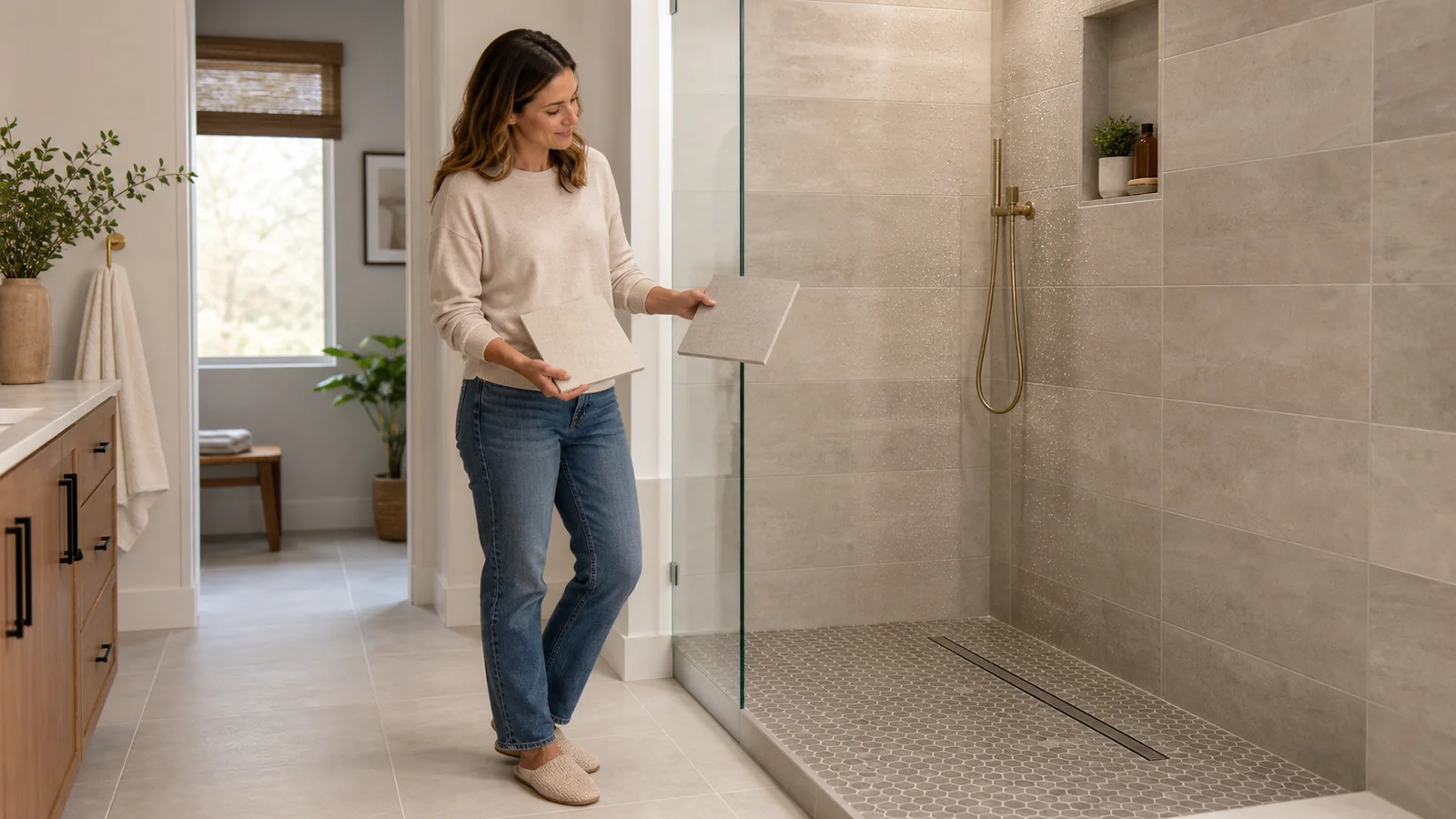
“Wet area” does not describe one single application. A shower wall, shower floor, bathroom floor, pool surround, and outdoor patio meet water in different ways. Choose for the exact location—not simply from a package labeled “bathroom tile.”
Begin with Where the Tile Will Go
Before comparing colors or finishes, describe the space precisely. Will people walk there barefoot? Will soap, shampoo, grease, rain, pool chemicals, or freeze-thaw weather be present? Is the surface flat, sloped, interior, or exterior?
Not sure whether your product is wall-only or floor-rated? Start with Wall Tile vs. Floor Tile →
Five Wet Areas, Five Different Decisions
| Location | What the buyer should verify |
|---|---|
| Shower wall | Wall approval, cleanability, waterproof assembly, joints, penetrations, and suitable setting materials |
| Shower floor | Specific shower-floor approval, wet walking conditions, slope, drainage, grout joints, and waterproofing |
| Bathroom floor | Wet interior floor approval, finish, cleaning, traffic, and water near tubs, showers, or sinks |
| Pool surround | Barefoot wet use, drainage, heat, chemicals, exterior exposure, and applicable project requirements |
| Outdoor wet area | Exterior wet approval, rain, dirt, slope, drainage, sunlight, and freeze-thaw exposure where relevant |
Tile Is Not the Waterproofing System
Porcelain has low water absorption, but grout joints, corners, drains, fixtures, and transitions remain part of the assembly. A beautiful tile cannot correct a missing or poorly installed waterproofing membrane.
In showers and other wet installations, the substrate, membrane, drain connection, penetrations, slope, setting materials, grout, sealant joints, and workmanship must function together. Grout joints themselves should not be treated as the waterproof layer.
Slip Resistance Is More Than One Number
Wet DCOF information helps compare products for certain applications, but it does not guarantee that a person cannot slip. Soap, oils, footwear, bare feet, surface structure, slope, drainage, cleaning, and maintenance all affect the real condition.
For a friendly explanation of ratings and limitations, read What Does Slip Resistance Mean? →
Choose a Finish You Can Live With
A more textured surface may provide useful traction in some conditions but can require more cleaning. A smoother or polished finish may be easier to wipe on a wall but may not be approved for a wet floor. Balance the manufacturer’s application guidance with the maintenance you will actually perform.
Compare matte, polished, textured, and grip surfaces in How to Choose a Porcelain Tile Finish →
The Wet-Area Buyer Checklist
- Name the exact location: wall, shower floor, wet interior floor, pool surround, or exterior floor.
- Confirm written approval for the exact tile, size, color, and finish.
- Identify water, soap, oils, chemicals, footwear, slope, weather, and expected users.
- Review wet walking and maintenance information—without treating one result as a guarantee.
- Confirm the waterproofing, drainage, substrate, mortar, grout, and movement-joint system.
- Check local codes and accessibility or project requirements where applicable.
- Make sure the installer has experience with that specific wet-area assembly.
Common Questions
What is the best tile for a wet area?
The best tile is the exact product and finish approved for the specific location. Shower walls, shower floors, wet interior floors, pool surrounds, and exterior floors are not interchangeable.
Is porcelain tile waterproof?
Porcelain has low water absorption, but a tiled assembly is not automatically waterproof. The membrane, substrate, transitions, penetrations, drainage, and installation provide water management.
Can any bathroom tile be used on a shower floor?
No. Confirm that the exact product is approved specifically for shower floors, not merely bathrooms or shower walls.
Does a higher DCOF number guarantee a nonslip floor?
No. DCOF is useful information, but no tile is slip-proof. Contaminants, footwear, slope, drainage, cleaning, and users also matter.
Are small mosaics always better for shower floors?
Not automatically. They can follow slopes and add grout joints, but the product must still be approved and work with the drain and installation.
Can polished porcelain be used in a wet area?
It may be suitable on some wet walls. Floor use requires specific approval and evaluation of wet conditions, maintenance, and the complete application.