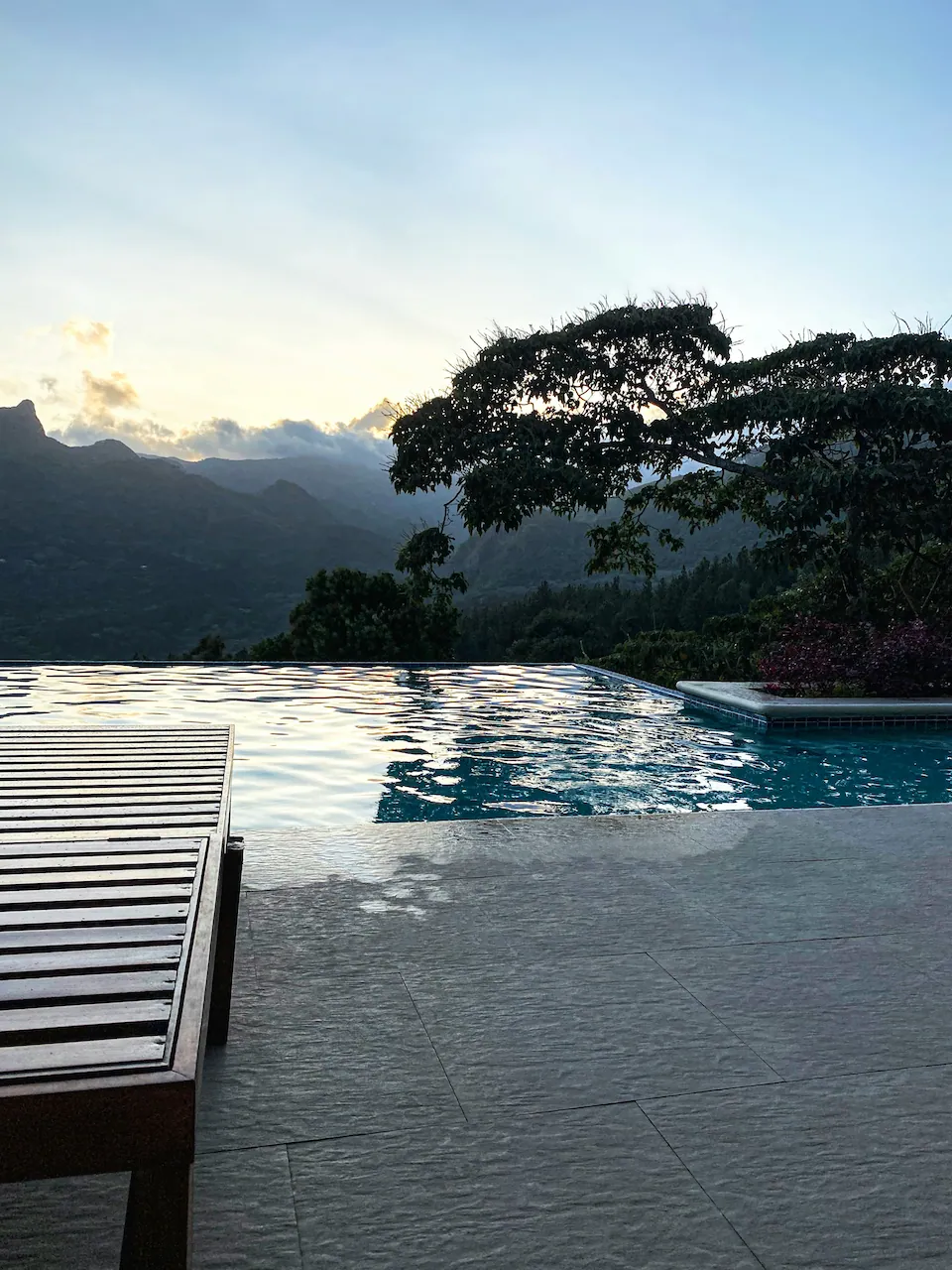
Slip resistance describes how a walking surface interacts with footwear or bare feet under defined conditions. For porcelain tile, it is not a permanent yes-or-no property and cannot be understood from texture, finish name, or one isolated number alone.
What Slip Resistance Means
A slip can occur when the available friction between a person and the floor is insufficient for the movement being made. The result depends on the tile surface, footwear or bare feet, water or another contaminant, slope, drainage, cleaning, wear, gait, and the surrounding environment.
Laboratory and field tests measure a surface-related friction property under prescribed conditions. They are valuable for comparison and classification, but they do not reproduce every person, contaminant, movement, or maintenance condition. For that reason, a test result contributes to selection; it does not guarantee that no one will slip.
DCOF and ANSI A326.3
DCOF means dynamic coefficient of friction. “Dynamic” refers to friction measured while a standardized slider moves across the test surface. In the United States, ANSI A326.3-2021 describes laboratory and field measurement of DCOF for hard-surface flooring and includes product-use classifications and specification guidance.
The familiar value 0.42 remains part of this framework, but it requires context. Under ANSI A326.3, Interior, Dry (ID) uses a dry DCOF criterion of at least 0.42, and Interior, Wet (IW) uses a wet DCOF criterion of at least 0.42 or a manufacturer-declared classification. The thresholds stated in the standard apply to the specified device; equivalent devices require correlation.
The number should not be interpreted as a boundary between “safe” and “unsafe.” ANSI A326.3 and TCNA guidance emphasize that DCOF must not be the only factor used to determine whether a flooring material is appropriate for an application.
The Five ANSI A326.3 Product-Use Classifications
| Classification | Reference | General meaning |
|---|---|---|
| Interior, Dry | ID | Interior areas expected to remain dry during normal use. |
| Interior, Wet | IW | Level interior areas expected to become wet with water. |
| Interior, Wet Plus | IW+ | More demanding interior wet conditions identified through manufacturer declaration. |
| Exterior, Wet | EW | Exterior pedestrian surfaces expected to become wet. |
| Oils/Greases | O/G | Areas where oil or grease contamination is expected. |
IW+, EW, and O/G are manufacturer-declared classifications. Their evaluation may consider DCOF together with surface structure, contaminants, drainage, grout joints, traction-enhancing features, manufacturing controls, and experience with similar surfaces. Mosaic and strongly profiled surfaces can also require manufacturer declaration because structure may affect the measuring device.
Always confirm that the classification belongs to the exact color, finish, and format. Similar-looking surfaces within one collection can produce different results or recommendations.
Ramp and Pendulum Test Methods
International projects may reference additional methods. EN 16165 contains evaluation methods for pedestrian surfaces, including inclined-plane, pendulum, and tribometer approaches. The ramp method associated with footwear can produce familiar R classifications; barefoot testing uses a separate framework. These classifications should be read under the exact standard and test condition.
The British Pendulum Tester measures energy loss as a rubber slider passes over a test surface. ASTM E303-22 provides a procedure for measuring surface-friction properties with this apparatus in laboratory or field conditions.
DCOF, ramp classifications, and pendulum results are not interchangeable conversion scales. ASTM E303 itself notes that pendulum results do not necessarily agree or directly correlate with other friction or skid-resistance methods. A specification should name the accepted method rather than converting one result into another informally.
Why ASTM C1028 Should Not Be Used as Current Evidence
Older literature may cite ASTM C1028, a static coefficient-of-friction method using a horizontal dynamometer pull meter. ASTM lists C1028 as withdrawn in 2014. A legacy C1028 value should not be treated as a substitute for current ANSI A326.3 information or another method required by the project.
Selecting Porcelain Tile for a Slip-Resistance Application
- Define the environment: dry interior, water-wet interior, shower, commercial kitchen, exterior terrace, pool surround, or another condition.
- Identify contaminants: water, soap, oils, food residues, dust, sand, or cleaning products.
- Request exact data: obtain the test method, result, product-use classification, finish, format, and date.
- Review the whole surface: include slope, drainage, grout joints, mats, transitions, and expected footwear or barefoot use.
- Plan maintenance: soil and residue can change traction; cleaning must match the tile texture and contaminant.
- Follow project requirements: confirm manufacturer guidance, applicable codes, standards, design-professional direction, and owner expectations.
For an application-by-application comparison, see Buying Guides: How to Choose a Porcelain Tile Finish for Every Application →
Installation and Maintenance Still Matter
A correctly selected product can perform poorly when drainage is inadequate or residue accumulates. Excessive slope transitions, standing water, inappropriate cleaners, worn entrance mats, oils, and compacted soil can change real-world conditions.
Structured surfaces may require brushes or cleaning equipment capable of reaching the texture. Cleaning products should be used at the correct dilution and removed thoroughly. Periodic inspection is particularly important at entrances, wet transitions, food-service zones, and exterior areas.
Common Questions
Is DCOF 0.42 considered slip-proof?
No. The 0.42 criterion is part of specific ANSI A326.3 classifications and test conditions. It is not a guarantee against slipping and should not be the only factor used to determine suitability.
Does textured porcelain tile always have better slip resistance?
No. Texture can influence traction, but appearance cannot predict the result. Verify the exact product’s classification, test data, intended use, drainage, contaminants, and maintenance requirements.
What is the difference between DCOF and an R rating?
They come from different test approaches. DCOF uses a moving slider under a specified tribometer method, while an R classification comes from a footwear ramp evaluation. The results are not directly convertible.
Can polished porcelain tile be used on a floor?
Yes, when the exact polished product is approved for the intended floor condition. Dry and wet locations require different evaluation, and manufacturer data must be checked for that specific finish.
Does “anti-slip” mean the tile is safe everywhere?
No. “Anti-slip” is not a universal guarantee. Real conditions include water or other contaminants, slope, drainage, footwear, cleaning, wear, and human movement.
Standards and Sources Referenced
This article summarizes the public scopes and guidance below. Use the complete current standard, manufacturer documentation, and project requirements for specification decisions.
- ANSI A326.3-2021 — DCOF measurement, product-use classifications, and guidance for hard-surface flooring.
- TCNA: Dynamic Coefficient of Friction FAQ — classification criteria and manufacturer-declared categories.
- DIN EN 16165:2023-02 / EN 16165:2021 — evaluation methods for slip resistance of pedestrian surfaces.
- ASTM E303-22 — surface-friction measurement using the British Pendulum Tester.
- ASTM C1028-07 — withdrawn static coefficient-of-friction method, included here to identify outdated references.