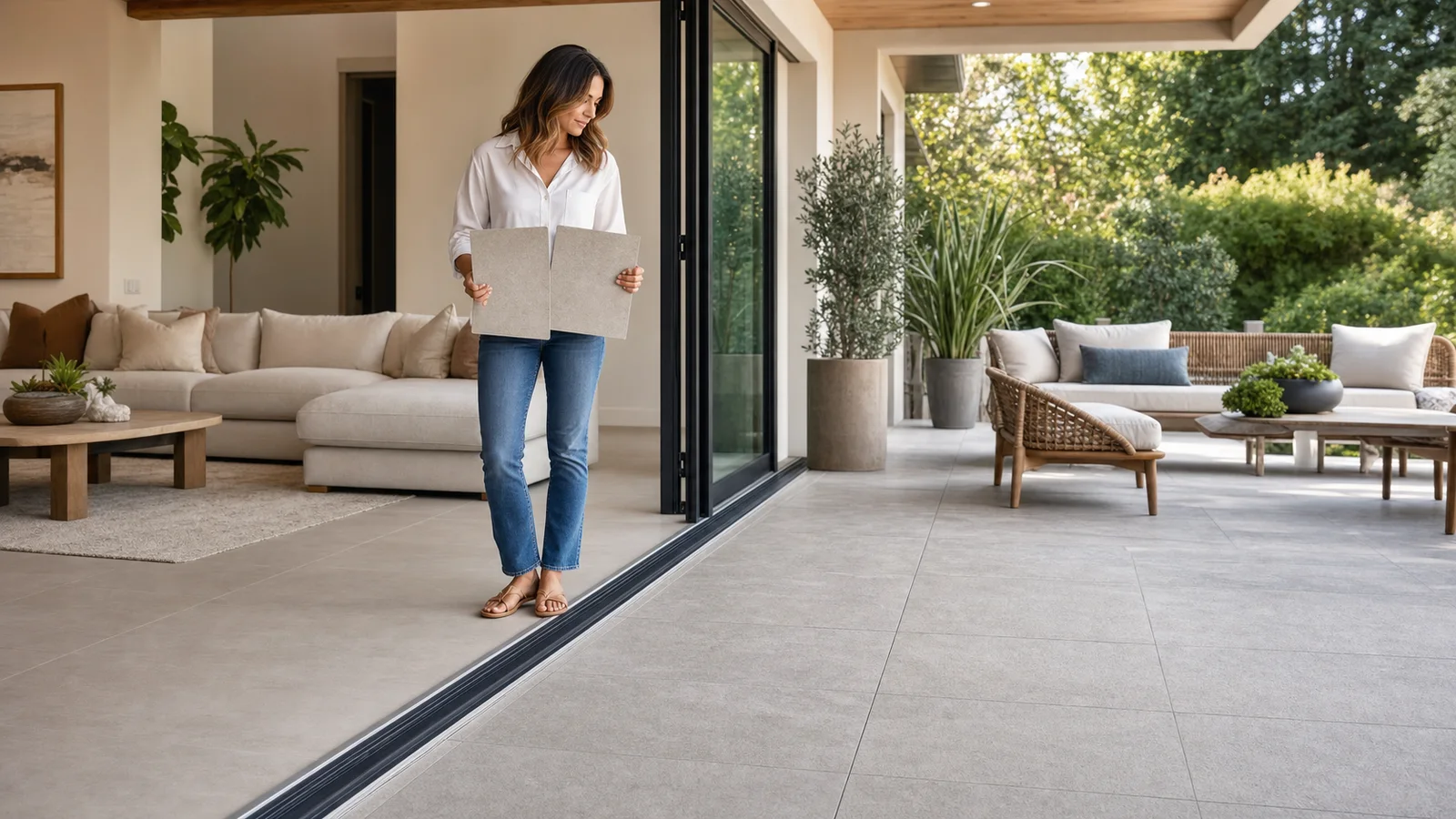
Porcelain tile is not automatically outdoor tile. Its low water absorption is valuable, but an exterior surface must also handle rain, dirt, sunlight, temperature changes, drainage, movement, and—in some climates—freezing and thawing.
Why the Porcelain Label Is Not Enough
Porcelain is defined by low water absorption. That alone does not tell you whether a particular finish suits wet exterior walking, whether it will be easy to maintain outdoors, or whether the complete installation can survive heat, cold, water, and movement.
Some collections offer one finish for interiors and a coordinated textured finish or paver for exteriors. They look related but solve different problems.
If you are still comparing material families, start with Porcelain Tile vs. Ceramic Tile →
What Changes When Tile Goes Outdoors?
| Indoor conditions | Outdoor conditions may add |
|---|---|
| Controlled temperature | Heat, cold, daily temperature swings, and freeze-thaw cycles |
| Limited rain exposure | Rain, standing-water risk, drainage, and wet walking |
| Less direct sunlight | UV exposure, heat gain, and visible weathering |
| Interior dirt and cleaning | Sand, leaves, soil, pool chemicals, and outdoor maintenance |
| Interior movement | Greater thermal movement plus exterior substrate and structural demands |
Patio, Pool Deck, Balcony, or Covered Porch?
- Patio: verify exterior-floor approval, wet conditions, slope, drainage, climate, and installation method.
- Pool surround: add barefoot use, pool chemicals, surface temperature, drainage, and project requirements.
- Balcony or deck: waterproofing, structure, edges, flashing, water management, and movement are critical.
- Covered porch: still treat it as exterior unless the manufacturer and project design say otherwise.
- Exterior wall: walking traction may not apply, but weather, bond, water management, frost, and wind still matter.
For a deeper introduction to exterior products, read What Is Outdoor Porcelain Tile? →
Freeze-Thaw and Drainage Work Together
Frost-resistant tile can still be damaged when water collects in grout joints, installation voids, or poorly drained layers and then freezes. The rating does not replace slope, drainage, mortar coverage, exterior-rated materials, movement joints, and a suitable substrate.
What About “Anti-Slip” Outdoor Tile?
“Anti-slip” is not a universal promise. Outdoor walking conditions change with rain, algae, dirt, oil, footwear, slope, drainage, cleaning, and wear. Review the manufacturer’s use classification and test information for the exact surface, then consider how the area will really be used and maintained.
Our technical guide explains the ratings and their limitations: What Does Slip Resistance Mean in Porcelain Tile? →
Can the Same Look Continue Outside?
Yes. A coordinated collection can use a smoother interior finish inside and an exterior-approved, more textured finish or paver outside. Compare samples in natural light and confirm actual dimensions if the two versions must align across a doorway.
Extra texture can require extra cleaning, so choose a surface you can realistically maintain.
The Outdoor Buyer Checklist
- Is the exact product and finish approved for exterior floors, exterior walls, or both?
- Will people walk there when it is wet, barefoot, or wearing shoes?
- Does the climate include freezing, extreme heat, or large temperature changes?
- How will water drain away from the surface and the assembly?
- Are the substrate, mortar, grout, waterproofing, coverage, and movement joints exterior-rated?
- Will sunlight, dirt, chemicals, or maintenance affect appearance and cleaning?
- Does the written warranty include this location and installation method?
For pool decks and other regularly wet locations, continue with How to Choose Porcelain Tile for Wet Areas →
Common Questions
Can indoor porcelain tile be used outdoors?
Only when the manufacturer specifically approves the exact product and finish for the intended exterior application and climate.
Can outdoor porcelain tile be used indoors?
Often yes when approved, but heavily textured exterior finishes may require more cleaning and feel different underfoot.
Is all porcelain tile frost resistant?
No. Low water absorption often supports frost resistance, but verify written exterior and freeze-thaw approval.
Does a covered patio need outdoor-rated tile?
Usually yes. It may still experience rain, condensation, temperature changes, dirt, sunlight, and exterior movement.
Does anti-slip mean an outdoor tile cannot be slippery?
No. Water, dirt, oils, footwear, slope, drainage, cleaning, wear, and user behavior all affect walking safety.
Can I use the same look indoors and outdoors?
Yes. Coordinated collections may share a design while using different finishes, thicknesses, sizes, or installation methods.