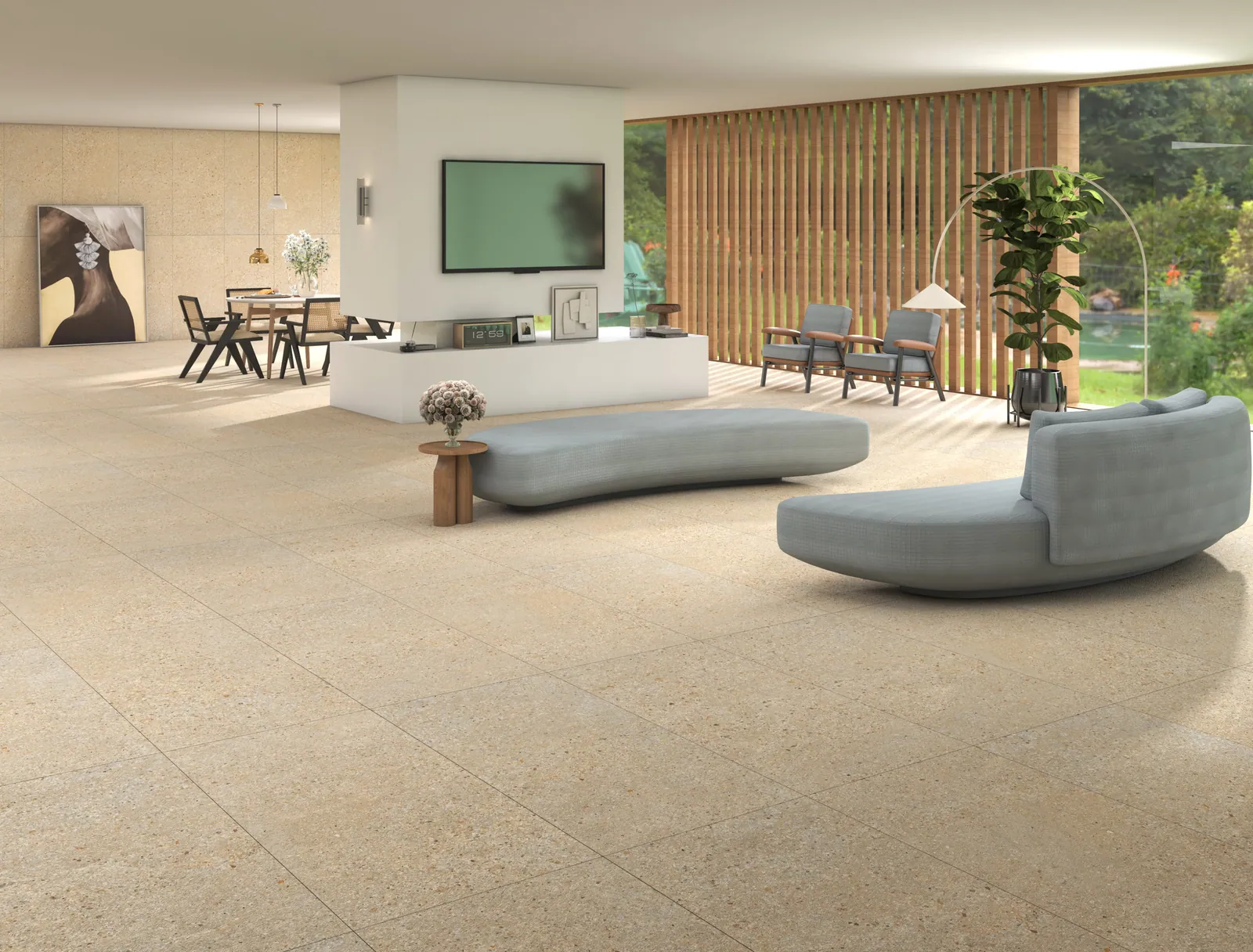
Outdoor living spaces have become an extension of the modern home. Patios, pool decks, outdoor kitchens, terraces, walkways, and gardens are now designed with the same attention to detail as interior spaces. As a result, homeowners and designers increasingly seek materials that combine beauty, durability, and long-term performance under changing weather conditions.
Outdoor porcelain tile has become one of the most trusted surfacing materials for these environments. Engineered to withstand moisture, sunlight, temperature fluctuations, and heavy use, it provides an elegant solution for both residential and commercial projects while requiring very little maintenance.
What Is Outdoor Porcelain Tile?
Outdoor porcelain tile is a porcelain surface specifically designed for exterior applications. While it shares many characteristics with standard porcelain tile, outdoor collections are typically manufactured with textured, slip-resistant finishes that improve traction under wet conditions.
Many manufacturers also produce thicker outdoor porcelain—commonly 20 mm (approximately ¾ inch)—for applications such as patios, garden paths, rooftops, and pool decks. These thicker products may be installed over concrete slabs, mortar beds, pedestals, or compacted gravel systems depending on the project requirements.
Can Porcelain Tile Really Be Used Outdoors?
Yes.
Porcelain tile is classified by low water absorption—0.5 percent or less under the applicable test method. That property can support exterior use, but it does not by itself confirm freeze-thaw suitability or approval for a particular climate and installation.
For exterior use, confirm the manufacturer’s approval, freeze-thaw data where relevant, surface drainage, slip characteristics, setting system, substrate, movement accommodation, and local climate conditions.
Why Has Outdoor Porcelain Become So Popular?
Modern homeowners want outdoor spaces that are both beautiful and practical.
Outdoor porcelain offers the appearance of natural stone, concrete, wood, or marble while providing exceptional durability and significantly lower maintenance requirements.
Many porcelain collections are designed with matching indoor and outdoor finishes, allowing architects and designers to create seamless visual transitions between interior living spaces and exterior patios.
This continuity has become one of the defining characteristics of contemporary residential architecture.
Advantages of Outdoor Porcelain Tile
Outdoor porcelain provides numerous practical advantages.
Where Is Outdoor Porcelain Commonly Used?
Outdoor porcelain is suitable for many exterior applications, including:
Installation Considerations
Successful outdoor installations begin with proper planning.
Drainage, substrate preparation, expansion joints, slope, and the installation system all play an important role in long-term performance.
Because every project presents unique conditions, selecting the appropriate installation method is just as important as selecting the tile itself.
Professional installation following current manufacturer instructions and applicable standards helps reduce avoidable failures; actual service life depends on the complete assembly and exposure.
Maintenance
Outdoor porcelain requires very little maintenance compared to many traditional paving materials.
Routine sweeping combined with occasional washing using water and a pH-neutral cleaner is generally sufficient to maintain its appearance.
Unlike many natural stones, porcelain does not typically require periodic sealing, making it an attractive long-term solution for homeowners seeking both beauty and convenience.
What to Remember
Outdoor porcelain can be a practical exterior surface when the exact product and complete installation system are approved for the location. Do not select it from appearance or the word “porcelain” alone.
For homeowners, architects, designers, and builders seeking durable, low-maintenance outdoor surfaces, porcelain continues to establish itself as one of today's most reliable and versatile choices.
Common Questions
Can any porcelain tile be installed outdoors?
No. Confirm the exact product’s outdoor approval, finish, thickness, installation method, climate limitations, and intended traffic.
Is outdoor porcelain automatically slip resistant?
No. Slip behavior depends on the particular surface and conditions. Review the manufacturer’s declared data and the complete application.
Can indoor and outdoor spaces use matching tile?
Often, but the collection may provide separate finishes or constructions for each area. Similar appearance does not mean identical performance.
What matters in freeze-thaw climates?
Product suitability, water management, substrate preparation, movement accommodation, setting materials, and installation details all matter.