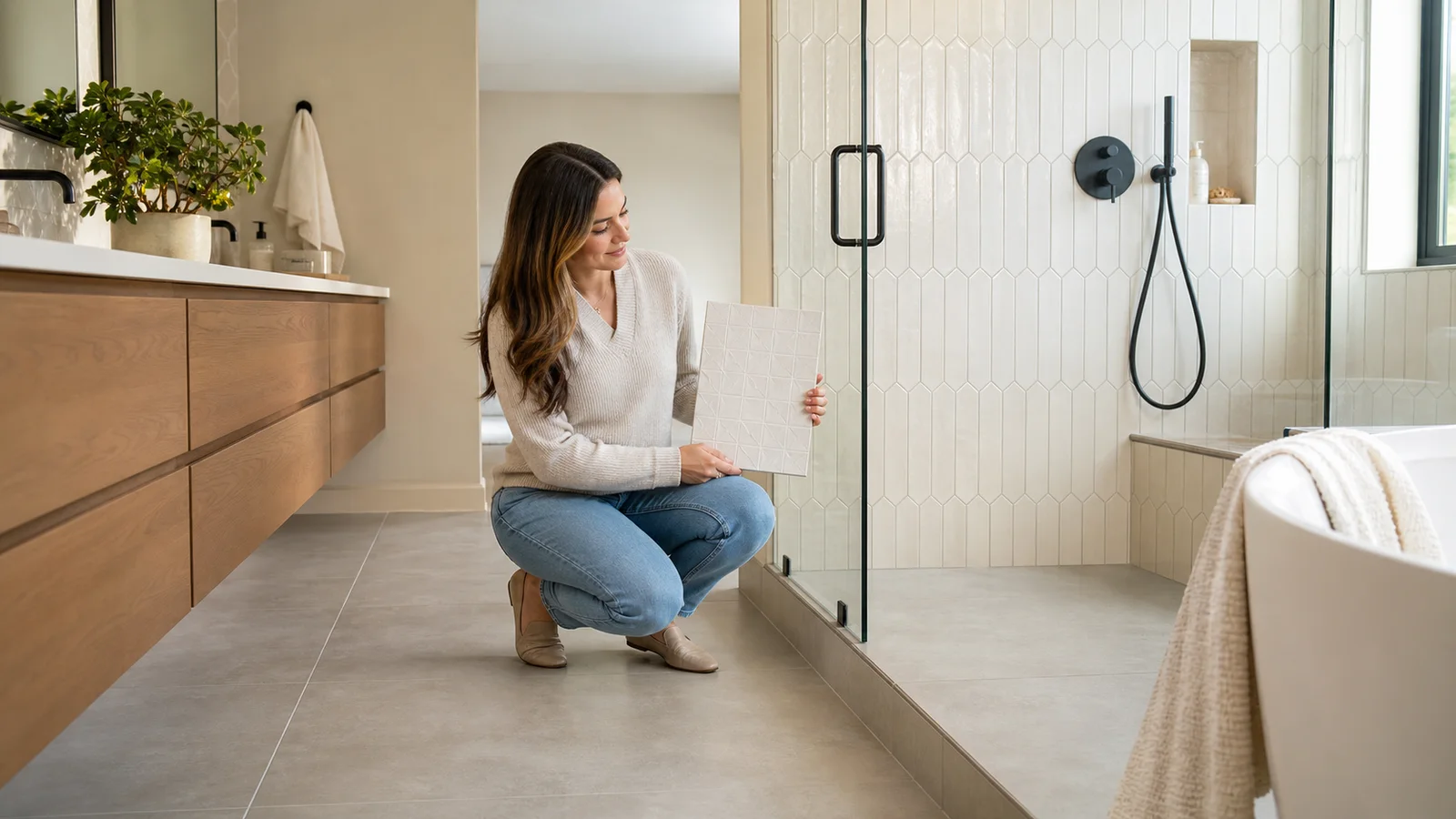
Wall tile and floor tile can look almost identical, but their approved uses may be very different. A floor must handle footsteps, dirt, impact, wear, and sometimes water. A wall does not receive foot traffic—but its installation must safely hold the tile vertically.
Do Not Decide by Appearance
A glossy subway tile, matte porcelain rectangle, decorative mosaic, and stone-look slab may each have different approvals. Thickness, shine, price, and the word “porcelain” do not answer the floor-or-wall question by themselves.
Look for application symbols or written usage information on the product page, sales sheet, carton, or technical document. Confirm the exact size, finish, and color because recommendations can vary within one collection.
Material and application are separate decisions. Continue with Porcelain Tile vs. Ceramic Tile →
What Makes Floor Use Different?
| Wall application | Floor application |
|---|---|
| No foot traffic | Must handle people, shoes, dirt, and movement |
| May prioritize color, relief, gloss, or decoration | Surface wear and the intended traffic matter |
| Vertical support and bond are essential | Substrate support, coverage, loads, and impact matter |
| Texture mainly affects cleaning and design | Surface and contaminants affect walking safety |
| Some products are made only for vertical use | Must be specifically approved for the intended floor |
Can I Use This Tile Here?
| Question | Buyer-friendly answer |
|---|---|
| Floor tile on an interior wall? | Often yes, with manufacturer approval and a wall system designed for its size and weight. |
| Wall-only tile on a bathroom floor? | No—not unless that exact tile is also approved for floor use. |
| Porcelain tile on both? | Possibly, but “porcelain” alone does not grant universal approval. |
| One tile from floor to wall? | A beautiful option when the product is approved for both and each installation is properly designed. |
| Large or heavy tile on a wall? | Possible with the correct substrate, mortar, coverage, support, movement accommodation, and installer. |
A Shower Wall Is Not a Shower Floor
“Suitable for showers” is too vague. Ask whether the product is approved for the shower wall, the shower floor, or both.
A shower floor adds wet-foot traffic, drainage slopes, grout joints, contaminants, cleaning, and slip considerations. The tile is only one part of a system that also needs proper waterproofing, drainage, setting materials, and installation.
Planning a bathroom, shower, or pool area? Continue with How to Choose Porcelain Tile for Wet Areas →
Five Questions Before You Buy
- Is this exact tile, size, color, and finish approved for a wall, floor, or both?
- If it is a floor, is it approved for the expected traffic and wet or dry conditions?
- If it is a shower, does the approval specifically include the shower floor?
- If it is going on a wall, can the complete wall assembly support its size and weight?
- Do the tile, mortar, substrate, waterproofing, grout, and installation instructions agree?
Common Questions
Can floor tile be used on a wall?
Often yes, when the manufacturer approves it for wall use and the wall assembly, mortar, installation method, and installer can support its size and weight.
Can wall tile be used on a floor?
Only if the manufacturer specifically approves that exact tile for the intended floor. Never assume a wall-only product can handle foot traffic.
Is porcelain tile always suitable for floors?
No. Porcelain describes a tile category, not automatic approval for every floor. Check the exact product and finish.
Can wall tile be used on a shower floor?
Do not assume it can. Shower floors require specific approval plus suitable slip behavior, drainage, slope, waterproofing, and installation.
Does floor tile have to look different from wall tile?
No. They can look nearly identical. Manufacturer documentation is more reliable than appearance.
Is heavy floor tile too heavy for a wall?
Not automatically, but it requires a suitable substrate, setting material, coverage, support, and installation method. Confirm the complete system.