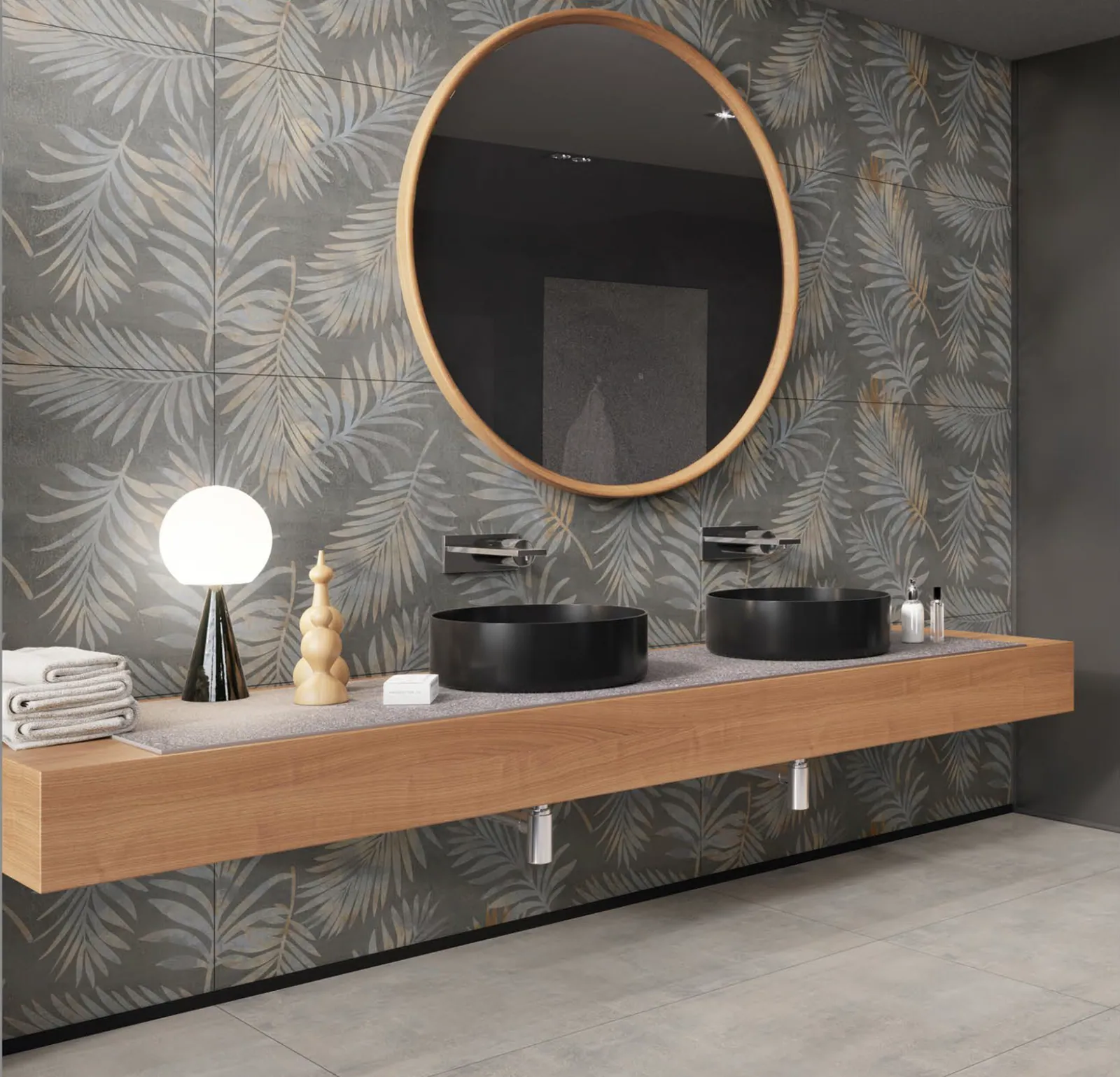
Wall tile has been used for centuries to protect surfaces while adding beauty, texture, and character to interior spaces. From traditional ceramic installations to today's large format porcelain panels, wall tile continues to play an essential role in both residential and commercial architecture.
Modern wall tile is available in an extraordinary variety of colors, sizes, textures, patterns, and finishes, allowing designers and homeowners to create spaces that are both functional and visually distinctive.
Wall tile can support applications ranging from kitchen backsplashes to floor-to-ceiling features, depending on the product, substrate, weight, setting system, exposure, and installation requirements.
What Is Wall Tile?
Wall tile is any tile specifically designed or selected for installation on vertical surfaces.
Depending on the application, wall tile may be manufactured from porcelain, ceramic, glass, natural stone, or other materials.
While many porcelain tiles can be installed on both floors and walls, some ceramic tiles are manufactured exclusively for wall applications, making them lighter and easier to install where heavy floor traffic is not a concern.
Selecting the appropriate material depends on the location, expected use, moisture exposure, and desired aesthetic.
Is Porcelain Better Than Ceramic for Walls?
Not necessarily.
Both porcelain and ceramic can be excellent wall materials when used in the appropriate application.
Ceramic wall tile is often an outstanding choice for interior walls because it offers beautiful designs, a wide variety of finishes, and is typically easier to cut and install.
Porcelain is denser and has low water absorption, but shower, commercial, and large-format wall use still require confirmation for the exact product and complete installation system.
Rather than asking which material is better, the more useful question is which material is better suited for the specific project.
Compare both classifications in the buyer guide Porcelain Tile vs. Ceramic Tile: Which Should You Choose? →
Why Has Wall Tile Become So Popular?
Wall tile allows designers to transform ordinary vertical surfaces into architectural features.
It introduces texture, depth, color, and visual interest while also protecting walls from moisture, stains, and everyday wear.
Because today's collections include marble look, wood look, stone look, decorative patterns, concrete finishes, and countless other designs, wall tile can complement virtually any architectural style.
Advantages of Wall Tile
Wall tile offers numerous practical advantages.
How Are Exposed Wall Tile Edges Finished?
Exposed porcelain tile edges should be planned before installation. Depending on the product and design, an edge may use a matching bullnose or trim piece, a metal or polymer profile, a carefully fabricated mitered edge, or a factory-finished and polished edge.
A rectified edge describes dimensional finishing of the tile; it does not automatically create a decorative exposed edge. Color through the tile body, glaze coverage, thickness, bevel, fabrication limits, and the manufacturer’s recommendations determine which edge treatment is appropriate.
Where Is Wall Tile Commonly Used?
Wall tile is frequently installed in:
Its versatility makes wall tile one of the most widely used finishing materials in modern architecture.
Maintenance
Wall tile requires very little maintenance.
Routine cleaning with warm water and a pH-neutral cleaner is generally sufficient to maintain its appearance.
Wall tile generally receives less foot traffic than flooring, but service life still depends on the substrate, installation, exposure, cleaning, impacts, and maintenance.
What to Remember
Wall tile combines beauty, functionality, and long-term durability.
Whether manufactured from porcelain or ceramic, it provides architects, designers, builders, and homeowners with one of the most versatile materials available for creating beautiful interior spaces.
Choosing the appropriate material for each application ensures the best balance of performance, appearance, and longevity.
Common Questions
Can floor tile be installed on a wall?
Sometimes, provided the wall assembly, product, weight, setting materials, and installation method are suitable. Confirm the complete system.
Can wall tile be installed on a floor?
Only if the exact tile is specifically approved for floor use and the expected traffic.
Does a shower wall need waterproofing behind tile?
Tile and grout are not the complete waterproofing system. Shower construction requires an appropriate, continuous water-management assembly.
How should exposed wall-tile edges be finished?
Plan trims, profiles, finished edges, miters, or architectural terminations before ordering and installation.