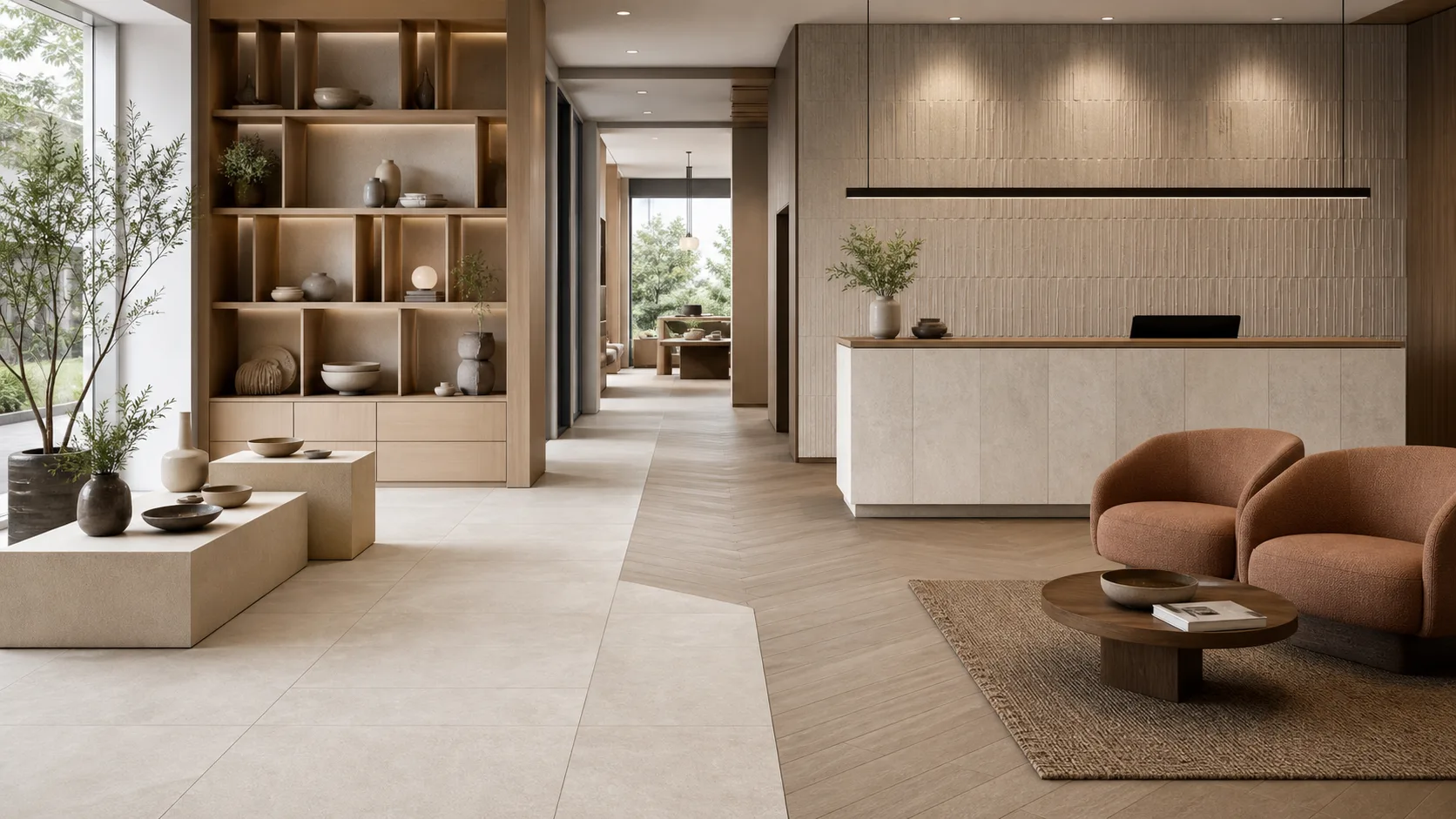
Retail and reception spaces must explain themselves quickly. Visitors should understand where to enter, pause, browse, wait, or ask for help—and porcelain tile can reinforce those cues while supporting the demands of daily traffic.
Create a Clear Moment of Arrival
The entrance sets expectations before a customer speaks to anyone. A calm floor field can make the reception desk easier to identify, while a more expressive tiled backdrop can establish identity. Keep the first view focused: if the floor, desk, wall, displays, and lighting all compete, the visitor may not know where to look.
Guide Movement Without Visual Clutter
Tile can quietly direct circulation. Long formats can emphasize a path; a border can define a waiting area; a tonal change can separate browsing from service; and a consistent floor can make a compact room feel larger.
| Zone | Tile can help by | Watch for |
|---|---|---|
| Entry | Creating a durable visual threshold | Tracked-in moisture, debris, and transitions |
| Reception | Framing the primary service point | Queues, luggage, carts, or concentrated traffic |
| Display | Providing a quiet background or defined platform | Competing patterns and frequent fixture changes |
| Waiting | Defining a comfortable pause zone | Chair movement, acoustics, and accessibility |
| Circulation | Reinforcing direction and continuity | Transitions, sightlines, and clear travel paths |
Make the Product or Service the Visual Leader
In retail, merchandise changes. A heavily patterned permanent floor may compete with future displays, colors, or seasonal arrangements. Neutral does not have to mean dull: subtle stone movement, restrained concrete character, wood interpretation, or a controlled directional layout can add depth while remaining flexible.
Reception areas can be more permanent and architectural. Tile on a backdrop, desk face, niche, or feature wall can create recognition without commercial logos or applied graphics.
Review Color, Scale, and Texture Under Real Light
Large-format tile can visually expand a room and reduce joint activity. Smaller formats can add detail to a desk, display base, or defined zone. Gloss and texture respond strongly to spotlights, daylight, and digital screens, so review samples from standing and seated viewpoints under the planned lighting.
For a focused approach to vertical accents, read Feature Walls →
Plan for the Everyday Space
The completed interior must work during deliveries, cleaning, furniture movement, rainy arrivals, busy periods, and layout changes—not only during photography. Product suitability must be determined for each area and expected condition.
- Confirm intended floor or wall use and written manufacturer recommendations.
- Coordinate entries, transitions, movement joints, edges, and accessible routes.
- Choose grout and texture with the actual cleaning program in mind.
- Plan cuts around desks, displays, doors, floor outlets, and movable fixtures.
- Keep replacement material from the same production run when practical.
Before ordering, approve representative samples, layout, lighting response, grout, quantities, substrate, setting system, transitions, and maintenance expectations with the project team.
Common Questions
What color works best in reception?
The color should support the atmosphere and real maintenance. Mid-tones often make everyday traffic less visually dominant.
Can different tiles guide customers?
Yes. Controlled changes in format, direction, tone, or texture can identify zones without excessive signage.
Should a retail floor be neutral?
Usually it should support the merchandise, though restrained pattern or direction can reinforce identity and circulation.
Are large formats suitable?
They can be, but flatness, layout, movement, handling, transitions, replacement planning, and product suitability matter.
Can tile cover a reception desk?
Yes, when the product, backing, edges, impact exposure, attachment, and detailing are appropriate.
What should be approved before ordering?
Samples, lighting, layout, grout, transitions, accessibility, cleaning, quantities, substrate, and installation details.