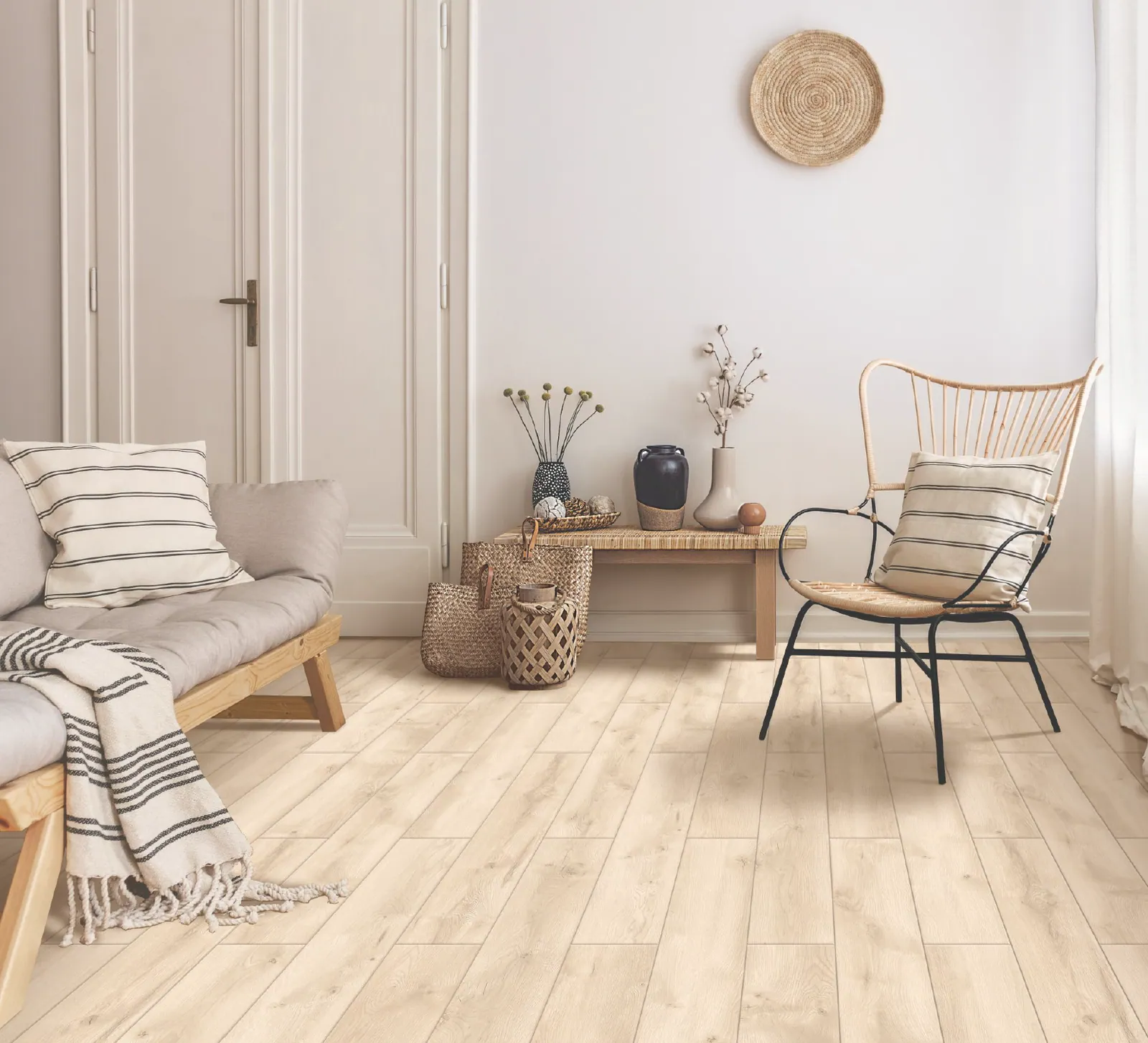
Wood has long been one of the world's most admired flooring materials. Its warmth, texture, and natural beauty create inviting spaces that never seem to go out of style. From rustic farmhouses to contemporary homes, wood flooring has remained a timeless architectural choice.
Porcelain manufacturing can reproduce wood-inspired grain, color, and plank proportions while providing maintenance and moisture characteristics different from natural wood.
Wood look porcelain tile combines the authentic character of hardwood with the technical performance of porcelain, making it one of the fastest-growing flooring categories in both residential and commercial design.
What Is Wood-look Porcelain Tile?
Wood look porcelain tile is a porcelain surface manufactured to faithfully reproduce the appearance of natural hardwood flooring.
Using advanced digital printing and textured finishes, modern porcelain collections recreate wood grain, knots, color variation, and surface texture with remarkable realism.
Available in a wide variety of colors, plank sizes, and finishes, wood look porcelain offers the visual appeal of traditional hardwood while delivering the durability expected from porcelain.
Can Porcelain Really Look Like Wood?
Yes.
Modern porcelain manufacturing has reached an extraordinary level of realism. High-definition digital printing captures the subtle details found in genuine hardwood, including grain movement, knots, mineral streaks, and natural color variation.
Many premium collections include dozens of unique graphic faces, greatly reducing visible repetition across an installation.
Combined with textured finishes, today's wood look porcelain often creates the visual impression of authentic hardwood while providing significantly greater resistance to moisture and wear.
Rather than replacing hardwood, wood look porcelain offers an alternative for projects where durability, water resistance, and long-term performance are priorities.
Why Has Wood Look Porcelain Become So Popular?
Modern lifestyles demand flooring that is both beautiful and practical.
Wood look porcelain delivers the warmth of natural wood while eliminating many of the maintenance concerns associated with traditional hardwood flooring.
Because porcelain absorbs very little water, it performs exceptionally well in kitchens, bathrooms, laundry rooms, entryways, and other environments where moisture may damage natural wood.
Its durability also makes it an excellent choice for homes with children, pets, or heavy daily traffic.
Advantages of Wood Look Porcelain Tile
Wood look porcelain offers numerous practical advantages.
Where Is Wood Look Porcelain Commonly Used?
Wood look porcelain is suitable for many interior applications, including:
Many collections may also be used in covered outdoor areas when specifically designed for exterior applications.
Maintenance
One of the greatest advantages of wood look porcelain is its ease of maintenance.
Routine sweeping and occasional cleaning with warm water and a pH-neutral cleaner are generally sufficient to maintain its appearance.
Unlike traditional hardwood, porcelain does not require sanding, staining, refinishing, or periodic sealing, making it an attractive long-term flooring solution.
What to Remember
Wood-look porcelain provides a wood-inspired appearance while remaining a ceramic surface.
Before buying, compare the number of graphic faces, variation, plank dimensions, finish, grout choice, layout limits, application approval, and maintenance guidance.
For projects where appearance, performance, and longevity are equally important, wood look porcelain has become one of today's most trusted flooring solutions.
Common Questions
Is wood-look porcelain made from wood?
No. It is porcelain tile whose surface reproduces wood grain, color, and plank character.
Should plank tiles be installed at a 50 percent offset?
Not automatically. Long tiles may have allowable warpage, so the layout and offset should follow the product and installation recommendations.
Will every plank look different?
Variation depends on the collection’s graphics and number of faces. Review multiple pieces before purchase.
What grout color works best?
A coordinated grout can make joints quieter, while contrast emphasizes each plank. The final choice should be tested with the actual tile.