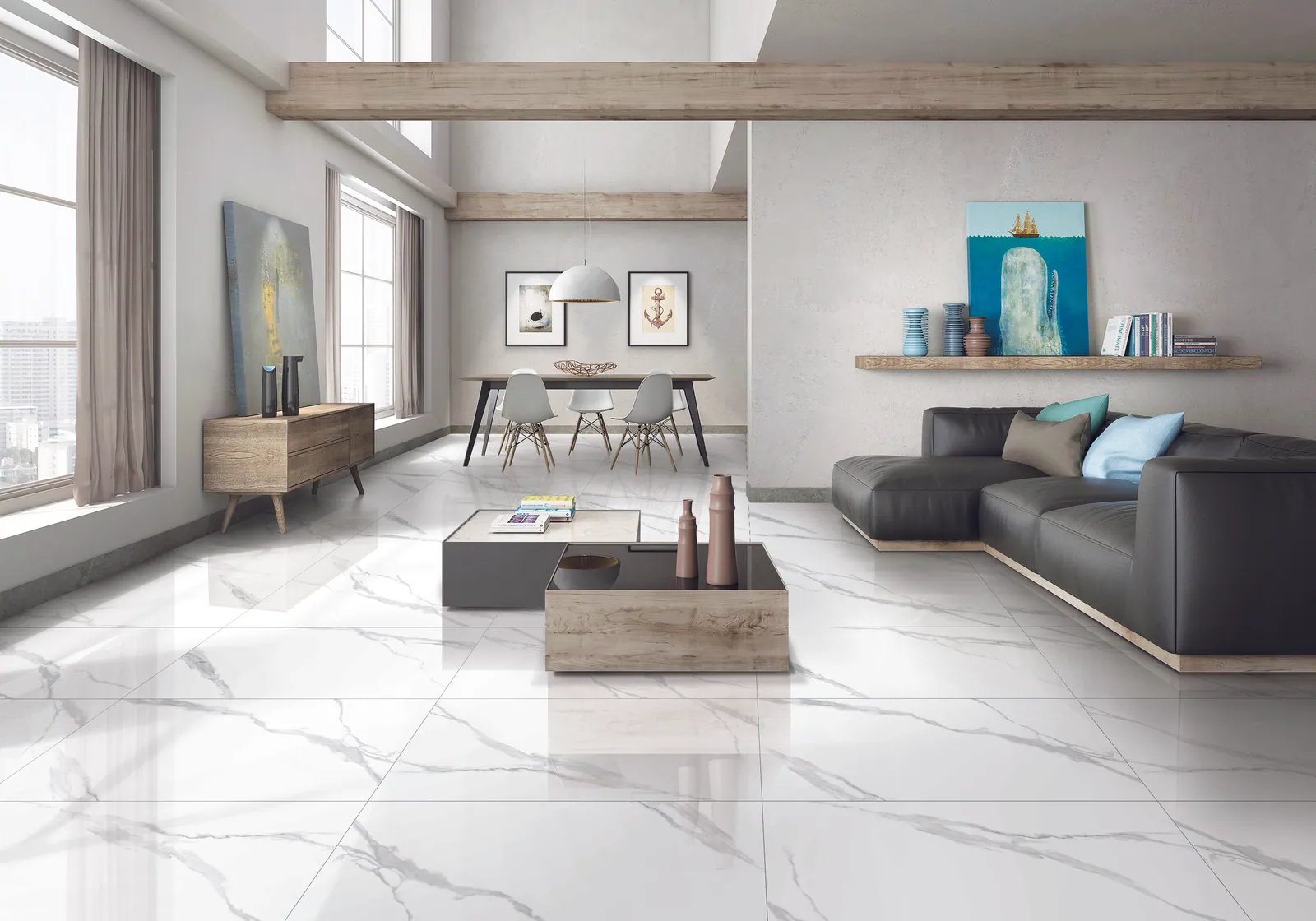
For centuries, natural marble has been regarded as one of the world's most elegant and prestigious building materials. Its distinctive veining, natural variation, and timeless beauty have made it a favorite in luxury homes, historic architecture, hotels, and iconic public spaces.
Porcelain manufacturing can reproduce many marble-inspired colors and veining styles while offering maintenance and performance characteristics that differ from natural stone.
Marble look porcelain tile faithfully reproduces the colors, veining, depth, and character of natural marble using high-definition digital printing technology. The result is a surface that captures the visual elegance of marble while delivering the practical advantages of porcelain.
What Is Marble Look Porcelain?
Marble look porcelain is a porcelain tile manufactured to replicate the appearance of natural marble. It is manufactured with controlled graphics and surface treatments that can reference familiar marble families such as Carrara, Calacatta, Statuario, and Arabescato. These names describe visual inspiration; the product remains porcelain.
Modern production techniques combine digital imaging with textured finishes and advanced glazing technologies to create surfaces that are remarkably realistic—even at close viewing distances.
Although the appearance closely resembles natural stone, the material itself remains porcelain, meaning it retains the strength, low water absorption, and durability that porcelain is known for.
Marble Look Porcelain vs. Natural Marble
This is one of the most common questions homeowners ask before beginning a renovation project.
Natural marble is a genuine stone formed over millions of years. Every slab is unique, with natural variations in color, veining, and mineral composition. While these characteristics make marble highly desirable, they also require greater care throughout its lifetime.
Marble look porcelain, by contrast, is engineered to provide a similar visual experience while reducing many of the maintenance requirements associated with natural stone.
Unlike marble, porcelain does not typically require periodic sealing, offers greater resistance to staining, and performs exceptionally well in high-traffic environments where durability is essential.
Rather than replacing marble, porcelain provides an alternative that balances aesthetics with long-term practicality.
Why Has Marble Look Porcelain Become So Popular?
Modern homeowners increasingly seek materials that combine luxury with everyday performance.
Marble look porcelain delivers that balance by offering elegant designs suitable for kitchens, bathrooms, living spaces, commercial projects, and hospitality environments without many of the ongoing maintenance concerns associated with natural marble.
Because porcelain is available in numerous sizes—including large format tiles and porcelain slabs—it also allows designers to create expansive, continuous surfaces with fewer grout joints and a highly contemporary appearance.
Advantages of Marble Look Porcelain
Marble-look porcelain combines marble-inspired graphics with the characteristics documented for the selected porcelain product.
Where Is Marble Look Porcelain Commonly Used?
Marble look porcelain is one of today's most versatile design materials and is frequently specified for:
Maintenance
One of the greatest advantages of marble look porcelain is its ease of maintenance.
Routine cleaning generally requires only warm water and a pH-neutral cleaner. Unlike many natural marbles, porcelain does not require periodic sealing and is highly resistant to common household stains when properly installed.
Simple routine care is usually sufficient to preserve its appearance for many years.
What to Remember
Marble-look porcelain is one way to obtain a veined surface while avoiding some of the care expectations associated with natural marble. Confirm the product’s finish, variation, application approval, maintenance, and installation requirements before buying.
For homeowners, architects, designers, and builders seeking sophisticated aesthetics without sacrificing long-term performance, marble look porcelain has become one of today's most compelling surfacing materials.
Common Questions
Is marble-look porcelain real marble?
No. It is porcelain tile designed to reproduce marble’s color, movement, and veining while retaining porcelain’s own characteristics.
Will every tile have a different vein pattern?
That depends on the collection’s graphic variation and number of faces. Review several pieces or a representative layout before approving the material.
Does marble-look porcelain need sealing?
The tile itself typically does not require the treatment expected of natural marble, but grout and any special surface treatment should be maintained according to their instructions.
How should the layout be approved?
Dry-lay or digitally review several pieces, distribute strong veins intentionally, and confirm cuts, joints, transitions, and focal areas before installation.