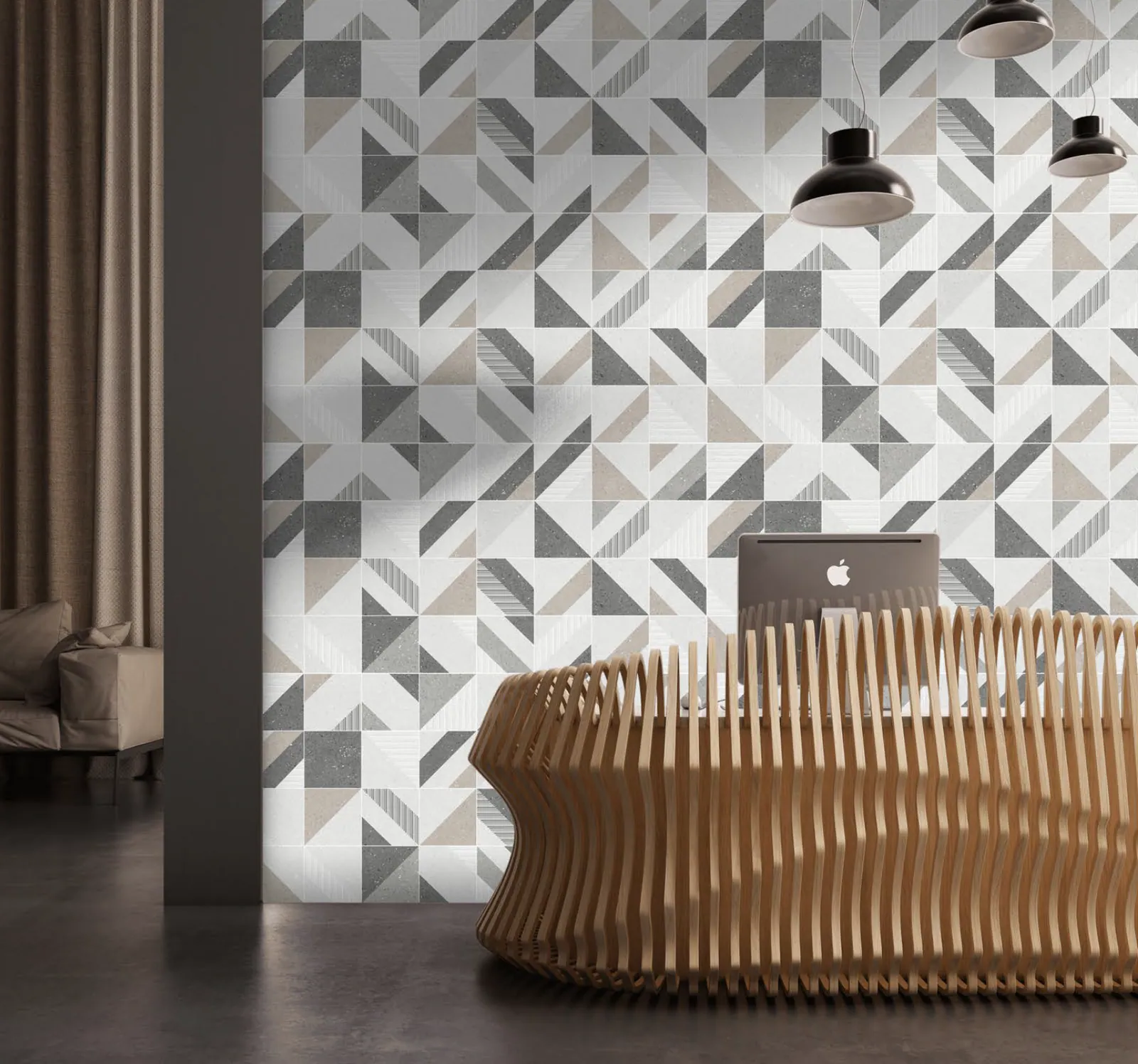
Throughout history, decorative surfaces have played an important role in architecture and interior design. From hand-painted ceramic walls to intricate mosaics and geometric patterns, decorative finishes have helped transform ordinary spaces into memorable environments.
Today, decorative porcelain tile continues that tradition by combining artistic design with the durability and performance of modern porcelain. Whether subtle or bold, decorative surfaces allow homeowners, architects, and designers to introduce personality, texture, and visual interest into both residential and commercial projects.
What Is Decorative Porcelain Tile?
Decorative porcelain tile refers to porcelain surfaces designed primarily to create visual impact rather than imitate another natural material.
These collections may feature geometric patterns, three-dimensional textures, artistic graphics, linear designs, floral motifs, terrazzo-inspired compositions, metallic effects, or countless other decorative elements.
Unlike marble look or wood look porcelain, decorative porcelain focuses on design expression and creativity.
Is Decorative Tile Only for Accent Walls?
Not at all.
Although decorative porcelain is frequently used to create feature walls, backsplashes, and focal points, many collections are suitable for floors, showers, commercial interiors, hospitality spaces, and exterior applications when manufactured for those environments.
The best application depends on the product's technical specifications, finish, and intended use.
Why Has Decorative Porcelain Become So Popular?
Modern interior design increasingly emphasizes individuality.
Decorative porcelain allows designers to introduce movement, texture, contrast, and personality without relying solely on furniture or accessories.
Because porcelain is available in numerous colors, formats, finishes, and patterns, decorative collections can complement architectural styles ranging from classic to contemporary.
They provide opportunities to create unique spaces while maintaining the durability and ease of maintenance expected from porcelain.
Advantages of Decorative Porcelain Tile
Decorative porcelain offers numerous practical advantages.
Where Is Decorative Porcelain Commonly Used?
Decorative porcelain is frequently installed in:
Maintenance
Decorative porcelain requires very little maintenance.
Routine cleaning with warm water and a pH-neutral cleaner is generally sufficient to preserve both the appearance and surface finish.
Unlike many decorative wall coverings or painted finishes, porcelain maintains its appearance for many years without requiring refinishing or specialized maintenance.
What to Remember
Decorative porcelain tile combines artistic expression with modern engineering.
Its ability to introduce pattern, texture, and visual character while maintaining the strength, durability, and low maintenance of porcelain has made it an increasingly popular choice for today's residential and commercial interiors.
Rather than simply covering a surface, decorative porcelain helps define the identity of a space.
Common Questions
Can decorative porcelain be used on floors?
Only if the specific product is approved for floor use and the expected traffic. A decorative appearance alone does not establish suitability.
How much pattern is too much?
There is no universal amount. Consider viewing distance, room size, lighting, permanent fixtures, and whether the surface should lead or support the design.
Should patterned tile be dry-laid first?
Yes. A preview helps identify repeats, orientation, borders, cuts, and the most visible focal areas.
What should be ordered for future repairs?
Discuss an appropriate overage with the installer and retain clearly labeled spare material from the same production lot when practical.